
Biography: science, technology and medicine Books

Turner Publishing Company The Father of American Conservation: George Bird
Book SynopsisAward-winning author, Thom Hatch presents the definitive biography of George Bird Grinnell (1849-1938), who was recognized in his time as “The Father of American Conservation.” This book chronicles not only Grinnell’s life, but also offers a history of his accomplishments in saving the wildlife and natural resources of this country. A remarkable man, Grinnell was known as a model of intellectual diversity, integrity, and professional dedication. He was a daring adventurer and explorer; crusading magazine publisher and editor (Forest and Stream, now Field and Stream); prolific author; accomplished outdoorsman; notable paleontologist, ethnologist, ornithologist, and anthropologist; presidential advisor; advocate for Native Americans; and this country’s first environmental activist, whose contributions in that arena are unparalleled in American history.Table of ContentsCONTENTS Introduction Chapter One: The Budding Naturalist Chapter Two: A Tenderfoot in the West Chapter Three: Buffalo Hunting With the Pawnee Chapter Four: Custer and Black Hills Gold Chapter Five: Yellowstone Country Chapter Six: Traveling, Collecting, and Writing Chapter Seven: Crusading Editor Chapter Eight: A Presidential Friendship Chapter Nine: Author and Advocate for Native America Chapter Ten: The Harriman Expedition Chapter Eleven: Grinnell’s Glacier Chapter Twelve: Preserving the Legacy Bibliography
£12.79

Mohedian Publishing Walking A Tightrope
Book SynopsisThe compelling personal account of Dr. Wu Jieping (1917 - 2011), one of China's most prestigious Physicians, who experienced the great revolution of the old China and developed from a former style of intellectual into a national leader of the new China. New 2024 edition features maps and photographs to assist learning.
£13.50

Laura Stoicescu Brain Recovery-A Journey of Hope: How a learning
Book Synopsis
£14.24

Birlinn General James Hutton: The Genius of Time
Book SynopsisDiscover one of the Scottish Enlightenment's brightest stars. Among the giants of the Scottish Enlightenment, the name of James Hutton is overlooked. Yet his Theory of the Earth revolutionised the way we think about how our planet was formed and laid the foundation for the science of geology. He was in his time a doctor, a farmer, a businessman, a chemist yet he described himself as a philosopher – a seeker after truth. A friend of James Watt and of Adam Smith, he was a polymath, publishing papers on subjects as diverse as why it rains and a theory of language. He shunned status and official position, refused to give up his strong Scots accent and vulgar speech, loved jokes and could start a party in an empty room. Yet much of his story remains a mystery. His papers, library and mineral collection all vanished after his death and only a handful of letters survive. He seemed to be a lifelong bachelor, yet had a secret son whom he supported throughout his life. This book uses new sources and original documents to bring Hutton the man to life and places him firmly among the geniuses of his time.Trade Review'In his attention to the social context of Hutton's life and work, Ray Perman provides a welcome addition to the still short First Geologist bookshelf. James Hutton: The Genius of Time helps us to appreciate Hutton and the scientific fuse he lit' -- Andrew H. Knoll * Times Literary Supplement *'It is hard to see how Ray Perman's excellent biography of James Hutton is ever likely to be supplanted as the definitive account of Hutton's life and ideas' -- Ken Lussey * Undiscovered Scotland *'This engaging biography offers a rich and sympathetic account of one of the most important intellectual stars of the Enlightenment' -- Allan Massie * The Scotsman *'Thought-provoking, easy-to-digest, and peppered with tales that could form the basis of a binge-worthy TV drama' * Scottish Field *'Perman deftly picks his way through Hutton's life explaining his complex theories and mind-stretching ideas' * History Scotland Magazine *
£22.50

Icon Books Nikola Tesla and the Electrical Future
Book Synopsis'[This] crisply succinct, beautifully synthesized study brings to life Tesla, his achievements and failures...and the hopeful thrum of an era before world wars.' - NatureNikola Tesla is one of the most enigmatic, curious and controversial figures in the history of science. An electrical pioneer as influential in his own way as Thomas Edison, he embodied the aspirations and paradoxes of an age of innovation that seemed to have the future firmly in its grasp. In an era that saw the spread of power networks and wireless telegraphy, the discovery of X-rays, and the birth of powered flight, Tesla made himself synonymous with the electrical future under construction but opinion was often divided as to whether he was a visionary, a charlatan, or a fool. Iwan Rhys Morus examines Tesla's life in the context of the extraordinary times in which he lived and worked, colourfully evoking an age in which anything seemed possible, from capturing the full energy of Niagara to communicating with Mars.Shattering the myth of the 'man out of time', Morus demonstrates that Tesla was in all ways a product of his era, and shows how the popular image of the inventor-as-maverick-outsider was deliberately crafted by Tesla - establishing an archetype that still resonates today.Trade ReviewSuperb * Nick Smith, Engineering and Technology magazine *[This] crisply succinct, beautifully synthesized study brings to life Tesla, his achievements and failures...and the hopeful thrum of an era before world wars. -- NatureThere have been other Tesla biographies, but this is the one I have been waiting for ... Tesla, he shows us, was - like his one-time boss and rival Thomas Edison - inventing nothing less than the electrified future. -- Philip Ball, author of Invisible: The Dangerous Allure of the UnseenClear and engaging ... a pleasure to read * Physics Today *
£11.69

Atlantic Books Pain: What It Is, Why It Happens and How to Cope
Book Synopsis'Combines a career's worth of expertise with a long history of pain treatment. For anyone concerned with pain treatment, or anyone who has struggled to manage pain of any kind, it's an important read.' GQPain is a universal human experience, but we understand very little about the mechanics behind it. We hurt ourselves, we feel pain, we seek help from a professional or learn to avoid certain behaviours that cause pain. But the story of what goes on in our body is far from simple. Even medical practitioners themselves often fail to grasp the complexities between our minds and bodies and how they interact when dealing with pain stimulus.Common conception still equates pain with tissue damage but that is only a very small part of the story - the organ which produces pain is the brain. Case studies show that a woman who has undergone a caesarean reports dramatically less pain than a patient who has had a comparably invasive operation. The soldier who drags themselves to safety after being shot deals with pain in a remarkably different way from someone suffering a similar injury on a street. The truth is that pain is a complex mix of nerve endings, psychological state, social preconceptions and situational awareness.Using case studies and medical history, Dr Lalkhen guides us through all aspects of pain, from chronic to acute, and the current landscape of pain treatments - from medication (including opioids) to electrical nerve stimulation. Whether it's a mild ache or severe discomfort, we all encounter pain in our lives and this important and illuminating book enables us to understand and cope with an experience that for so many can become all-consuming.Trade ReviewCombines a career's worth of expertise with a long history of pain treatment. For anyone concerned with pain treatment, or anyone who has struggled to manage pain of any kind, it's an important read. * GQ *As timely as it is important. What makes the book so prescient is the fact that Lalkhen understands exactly what is at stake. A life free from pain is a blessing while a life plagued by pain is a curse. * Scientific Inquirer *This splendid book - informative, empathic, and wise - about a universal experience will surely promote healing. * Booklist (Starred Review) *Lalkhen's mission? To change our understanding of pain so that it can be better managed... Lalkhen's genius rests in explaining the synthesis of body, mind and spirit in its manifestation... A fusion of history, psychology and science, Pain is a call to increase not only our level of emotional literacy but also empathy, particularly in the medical profession. * The Australian *Lalkhen knows a lot about pain and how sneaky it can be. A teacher and clinician, he describes the history of pain relief: how it allows surgery, what led to the opiate crisis, how pain affects people in different ways, and how pain can outlast tissue damage... This is a book to read if you are objectively curious about how pain works. * Listener *Drawing on research and his own experiences as a physician, the author explains that pain is largely misunderstood by both the public and medical professionals... With insights both scientific and personal, Lalkhen's study sheds light on a mysterious corner of physiology and medicine. * Publishers Weekly *[Lalkhen] illuminates his specialty... [and] takes up pain as experienced by patients and dealt with by doctors. Readers [will find] a sensitive doctor who writes well about an ongoing epidemic. * Kirkus Reviews *Provides appropriately detailed and understandable information while also offering suggestions practitioners should consider. * Library Journal *[Lalkhen] fulfills his mission [to 'explain pain in all its forms'] well, beginning with the anatomical mechanics of pain and a history of human relationships with pain, concluding with helpful prescriptions - including mindfulness - for changing our relationship to the way we suffer. * Mindful Magazine *A rather deep, and interesting book that could well find a home on any doctor's bookshelf. * NB Magazine *Table of Contents0: Introduction: An unexpected journey 1: How does pain work? 2: A brief history of pain 3: Give me something for the pain 4: The line between pleasure and pain - opioids and addiction 5: Pain with no injury 6: Pain management - needles, narcotics and knives 7: A journey of a thousand miles. 8: Torpedo fish 9: Do not go gentle into that good night 10: Show me the money - private pain practice 11: The beginning of the end
£17.73

C Hurst & Co Publishers Ltd Proving Ground: The Untold Story of the Six Women
Book SynopsisA fascinating, forgotten story of the six brilliant women who launched modern computing. As the Cold War began, America’s race for tech supremacy was taking off. Experts rushed to complete the top-secret computing research started during World War II, among them six gifted mathematicians: a patriotic Quaker, a Jewish bookworm, a Yugoslav genius, a native Gaelic speaker, a sophomore from the Bronx, and a farmer’s daughter from Missouri. Their mission? Programming the world’s first and only supercomputer—before any code or programming languages existed. These pioneers triumphed against sexist attitudes and huge technical challenges to invent computer programming, yet their monumental contribution has never been recognised—until now. Over a decade, Kathy Kleiman met with four of the original six ENIAC Programmers and recorded their stories. Here, with a light touch and a serious mind, she exposes the deliberate erasure of their achievements and restores the women to their rightful place as revolutionaries, bringing to life their camaraderie, their determination, and their rapidly changing world. As big tech struggles with gender inequality and momentum builds in restoring women to history, the time has come for this engrossing story to be uncovered and celebrated.Trade Review'Kleiman has a novelist’s gift for crafting a page-turning narrative, and the one on offer is both revelatory and inspiring. Fans of Dava Sobel’s The Glass Universe and Margot Lee Shetterly’s Hidden Figures are in for a treat.' -- Publishers Weekly (starred review)
£19.00

Reaktion Books Charles Darwin
Book SynopsisIn 1859 Charles Darwin published On the Origin of Species. In this bedrock of biology books Darwin carved a new origin-story for all life: evolution rather than creation. In his new biography J. David Archibald describes and analyses Darwin’s prodigious body of work, as well as his equally productive home life – he lived with his wife and seven children in the hectic environs of Down House, south of London. There among his family and friends Darwin continued to experiment and write many more books on orchids, sex, emotions, and earthworms until his death in 1882, when he was honoured with burial at Westminster Abbey. This is a fresh, up-to-date account of the life and work of a most remarkable man.Trade ReviewDon’t let the slender stature of this book fool you. This is a powerful and authoritative guide to the complex and often misrepresented life and work of Charles Darwin. J. David Archibald has mastered the sources and takes his readers on an extraordinary journey. – John van Wyhe, historian of science, Director of Darwin Online
£12.34

Reaktion Books Albertus Magnus and the World of Nature
Book SynopsisAs well as being an important medieval theologian, Albertus Magnus (Albert the Great) also made significant contributions to the study of astronomy, geography and natural philosophy, and his studies of the natural world led Pope Pius XII to declare Albertus the patron saint of the natural sciences. Dante Alighieri acknowledged a substantial debt to Albertus's work, and in the Divine Comedy placed him equal with his celebrated student and brother Dominican Thomas Aquinas. In this, the first full, scholarly biography in English for nearly a century, Irven M. Resnick and Kenneth F. Kitchell Jr narrate Albertus's key contributions to natural philosophy and the history of science, while also revealing the insights into medieval life and customs that his writings provide.
£15.26

Archaeopress The Life and Works of Robert Wood: Classicist and
Book SynopsisThe Life and Works of Robert Wood (1717-1771) commemorates the Irish classicist and traveller on the 250th anniversary of his death and provides the general reader with a study that can be regarded as a source book for the fascinating life and career of a much-neglected figure in the realm of Irish eighteenth-century travels and antiquarianism. The book starts by setting the context of eighteenth-century travels to the east and then examines the primary sources emanating from Wood’s own eastern voyages, as well as the relevant literary sources available to him before, during, and after his travels. It then provides an extensive and much-needed biographical account of Robert Wood, with particular reference to his Irish and English patrons, before examining the main results of the second tour (1750-1751), namely his three pioneering books: Ruins of Palmyra (1753), Ruins of Balbec (1757), and The Original Genius of Homer (1775). It ends by considering the enormous legacy of Robert Wood, in terms of the popularity of his books; the variety and quality of portraits commissioned by his friends and associates; his contribution to the study of classical literature; his influence on architectural drawing in late eighteenth- and nineteenth-century Europe; and the cultural significance of his work on building design. The text also reflects on the somewhat questionable nature of his works, in terms of the fact that his second voyage of the east, and the entire production of the first two books, were financed by his friend Dawkins, whose wealth derived from a slave plantation in Jamaica.Table of ContentsList of Figures ; Foreword ; Acknowledgements ; Dedication ; Introduction ; Eighteenth-Century British Travellers in the East ; A British Extension of the Grand Tour ; Motives for Undertaking the Eastern Voyage ; Eighteenth-Century Interest in the East ; The Role of Learned Societies and Academies ; The Sources ; Part 1: Primary Sources as Evidence for Wood’s Eastern Travels ; Part 2: Literary Sources Available to Robert Wood Prior to His First Eastern Voyage (1742-1743) ; Part 3: Literary Sources Available to Robert Wood for His Second Eastern Voyage (1750-1751) ; Biographical Account of Robert Wood ; Early Life ; Education ; First Grand Tour and Eastern Voyage (1738-1743) ; Third Grand Tour and Eastern Voyage (1749-1751) ; Third Grand Tour as Tutor to the 3rd Duke of Bridgewater (1754-1755) ; Wood Settles in London ; Death and Posthumous Matters ; Ruins of Palmyra (1753) ; Physical Description, Structure, Publication and Price of the Book ; Preface ; Immediate Reception of the Book ; Narrative ; Explanation of the Plates ; Ruins of Balbec (1757) ; Physical Description, Structure, Publication and Price of the Book ; Preface ; Immediate Reception of the Book ; Narrative ; Explanation of the Plates ; The Original Genius of Homer (1775) ; Development of the Book ; Physical Description and Structure of the Book ; Publication and Price of the Book ; Preface ; Immediate Reception of the Book ; Narrative ; Conclusion ; Brief Analysis of the Essay ; A Comparative View of the Ancient and Present State of the Troade ; Illustrations and Map ; Brief Analysis of the Comparative View ; Conclusion: The Legacy of Robert Wood ; Translations and Further Editions of Robert Wood’s Books ; Portraits of Wood ; Wood’s Contribution to the Study of Classical Literature ; Wood’s Contribution to Architectural Drawing in Late Eighteenth- and Nineteenth-Century Europe ; The Cultural Significance of Wood’s Work on Building Design ; Epilogue ; Bibliography ; Index
£23.75

Troubador Publishing Ltd Vital Capacity
Book SynopsisWhat makes a man abandon his family and his successful professional life for the goldfields of Australia? John Hutchinson left the coalfields of 19th Century Tyneside to become a surgeon, a physician and a pioneer of chest medicine.His research on lung capacity using his newly-designed machinereceived international acclaim.And then, just as the pinnacle of professional success was within his reach, he cast it all aside and travelled to Australia as a ship's surgeon.He was involved in the first large-scale miner's strike, colliery disasters, navigated the chaos of medical education in the early 19th century, invented the spirometer, and did some meticulous research.He then travelled to Melbourne in the early days of the Australian gold rush, and on to the goldfields of Victoria, before moving on to Fiji.Artist, sculptor, musician, and engineer, Hutchinson was a man of many parts, and his design for a spirometer survived until modern times, as did his term for maximum breathable air: vital capacity.In this book a renowned respiratory specialist discusses some of the other factors that influenced his life, including some crucial misconceptions about the causes of disease.
£11.69

Royal Botanic Gardens James Sowerby: The Enlightenment's Natual
Book SynopsisJames Sowerby (1757-1822) was an outstanding artist and natural historian, renowned for his discoveries and prodigious output of beautiful, scientific books of plants, fungi, animals, fossils and minerals, all at a key historical time; the age of Enlightenment in Great Britain. Beautifully illustrated with artwork and letter and manuscript extracts, this first full biography of Sowerby is a fascinating artistic and historical account, which extends beyond that of one key player.
£47.50

C Hurst & Co Publishers Ltd A Longing for Wide and Unknown Things: The Life
Book SynopsisAlexander von Humboldt was the most admired scientist of his day. But the achievements for which he was most celebrated in his lifetime always fell short of perfection. When he climbed the Chimborazo, then believed to be the highest mountain in the world, he did not quite reach the top; he established the existence of the Casiquiare canal, between the great water systems of the Orinoco and the Amazon, but this had been well known to local people; and his magisterial work, Cosmos, was left unfinished. This was no coincidence. Humboldt's pursuit of an all-encompassing, immersive approach to science was a way of finding limits: of nature and of the scientist's own self. A Longing for Wide and Unknown Things portrays a scientific life lived in the era of German Romanticism -- a time of radical change, where the focus on the individual placed a new value on feeling, and the pursuit of personal desires. As Humboldt himself admitted, he 'would have sailed to the remotest South Seas, even if it hadn't fulfilled any scientific purpose whatever'.Trade Review'Scrupulous and absorbing.' * Times Literary Supplement *'[A] captivating new biography of Alexander von Humboldt . . . dramatically drawn.''Evocative and perceptive . . . plenty of wit and insight to brighten the pages'.‘A Longing For Wide and Unknown Things is that . . . rare thing, a completely convincing biographical portrait of a highly complex individual, done in less than 250 pages . . [a] lovely, profound book.’ '[A] subtle biography . . . intriguing'.'Brilliant.''A Longing for Wide and Unknown Things is as entrancing as it is scholarly. Alexander von Humboldt leaps off the page, not just because he gave his name to more places and species than any other human being, but because he embodied the Romantic passion for nature which has captivated posterity. Maren Meinhardt’s book is a delicious way to get to know this irresistible figure.' -- Ferdinand Mount, author of 'The Tears of the Rajas: Mutiny, Money and Marriage in India, 1805-1905''Even in that glory age of Romantic art and scientific and geographical discovery, Alexander von Humboldt stands out as a giant. This is a superb portrait worthy of its impressive subject, a picture of the great man and of his fascinating times written with concision, brio and infectious love.' -- A. N. Wilson'Maren Meinhardt follows Alexander von Humboldt on his many personal and professional journeys, tracing the great naturalist’s footsteps with precision and love. She shows how his longing for wide and unknown things extended beyond the geographical realm to permeate his whole personality. This is biography as it should be: wondrous, romantic and deeply intelligent.' -- Ruth Scurr, author of 'John Aubrey: My Own Life''The great scientific traveller Alexander von Humboldt comes to life in this knowledgeable and illuminating biography. Maren Meinhardt reveals, with wisdom and precision, how von Humboldt’s remarkable life and far-sighted writing, rooted in German romanticism, set the stage for a more expansive and connected view of the natural world.' -- John Ryle, Legrand Ramsey Professor of Anthropology, Bard College, New York'Humboldt’s was a life before its time, and this beautifully attentive and deeply sympathetic book gives us not just its lineaments but something like its “soul”, catching with charm and insight more of the complexity and curiosity of its subject than ought to be possible in such a brief space.' -- Charlie Louth, Associate Professor of German, The Queen's College, University of Oxford
£27.00
Agio Publishing House Where Dogs Dwell: A nun's solidarity as a nurse
Book Synopsis
£13.77

Hachette Livre - BNF Les Fondateurs de l'Astronomie Moderne: Copernic,
Book Synopsis
£19.00

Springer Nature Switzerland AG Max von Laue: Intrepid and True: A Biography of
Book SynopsisThis biography gives an insider view of 20th century German science in the making. The discovery by Max von Laue in 1912 of interference effects demonstrated the wave-like nature of X-rays and the atomic lattice structure of crystals. This major advance for research on solids earned him the Nobel Prize two years later, the ultimate acclaim as an exceptional theoretician. As an early supporter of Einstein’s relativity theory, he published fundamental papers on light scattering as well as on matter waves and superconductivity. Laue may be counted among the few persons of influence in Germany who – as Einstein put it – managed to “stay morally upright” under Nazism. It is thus surprising that this is the first extensive biography of this famous scientist.Jost Lemmerich could hardly have been better equipped to describe German physics and physicists in the 1920s. His copiously illustrated historical account is based as much on scientific material as on private correspondence, creating a fascinating and convincingly detailed portrait.Trade Review“There can be no doubt that a comprehensive scientific biography of Max von Laue is overdue. He is most famous for the discovery of X-ray diffraction by crystals which earned him the 1914 Nobel Prize in Physics. … His life … deserves interest both from the perspective of physics as a discipline and the performance of a scientist within society. … the material contained in this biography makes it worthwhile to study carefully for anyone making a new attempt.” (Michael Eckert, Physics in Perspective, Vol. 25, 2023)“This book is a scholarly tour de force. It is illustrated with numerous portraits of the scientists and with fully referenced quotes and footnotes from their correspondence. It is a joy to read; and I learnt a lot.” (Moreton Moore, Crystallography Reviews, March 10, 2023)Table of ContentsForeword.- Introduction.- Childhood and youth.- Studies in physics.- Doctoral dissertation and first scientific research.- Private lecturer at the University of Munich.- Professorship in Zurich.- Professorship in Frankfurt am Main, WW I, Nobel Prize in physics.- Berlin – general and special theories of relativity.- Physics and politics in Berlin during the 1930s.- Physics and politics during WW II.- War’s end and Farm Hall.- Back in Germany.- Back in Berlin – in West Berlin.
£27.96

Books on Demand Vom Harz nach Berlin Martin Heinrich Klaproth:
Book Synopsis
£9.45

Central European University Press Brilliance in Exile: The Diaspora of Hungarian
Book SynopsisBy addressing the enigma of the exceptional success of Hungarian emigrant scientists and telling their life stories, Brilliance in Exile combines scholarly analysis with fascinating portrayals of uncommon personalities. István and Balazs Hargittai discuss the conditions that led to five different waves of emigration of scientists from the early twentieth century to the present. Although these exodes were driven by a broad variety of personal motivations, the attraction of an open society with inclusiveness, tolerance, and – needless to say – better circumstances for working and living, was the chief force drawing them abroad. While emigration from East to West is a general phenomenon, this book explains why and how the emigration of Hungarian scientists is distinctive. The high number of Nobel Prizes among this group is only one indicator. Multicultural tolerance, a quickly emerging, considerably Jewish, urban middle class, and a very effective secondary school system were positive legacies of the Austro-Hungarian Monarchy. Multiple generations, shaped by these conditions, suffered from the increasingly exclusionist, intolerant, antisemitic, and economically stagnating environment, and chose to go elsewhere. “I would rather have roots than wings, but if I cannot have roots, I shall use wings," explained Leo Szilard, one of the fathers of the Atom Bomb.Table of ContentsForeword (Ivan T. Berend) Introduction Preface Joseph A. Galamb Philipp Lenard Part 1, Early 1920s Introduction: Fleeing Ervin Bauer Stephen Brunauer Ladislaus Farkas Dennis Gabor George de Hevesy Theodore von Kármán Arthur Koestler Stephen W. Kuffler Nicholas Kurti Cornelius Lanczos John von Neumann Egon Orowan Michael Polanyi George Pólya Elizabeth Rona Leo Szilard Maria Telkes Edward Teller Eugene P. Wigner “Control”—Imre Bródy Part 2, Late 1930s – Early 1940s Introduction: Before It Is Too Late Michael and Alice Balint Ladislao José Biro Paul Erdos John G. Kemeny Olga Kennard Peter D. Lax George J. Popjak Valentine L. Telegdi Laszlo Tisza Part 3, Immediate Post-World War II Introduction: Post-War and Pre-Soviet Trauma, Endre A. Balazs Zoltan Bay Georg von Békésy Lars Ernster John C. Harsanyi Avram Hershko Georg and Eva Klein Albert Szent-Györgyi Part 4, 1956 Introduction: In the Wake of Suppressed Revolution Laszlo Z. Bito Andy Grove Peter Lengyel Joseph Nagyvary George A. Olah Gabor A. Somorjai Part 5, 1957‒1989 Introduction: Escape from “Paradise” Gyorgy Buzsaki Gabor Fodor Katalin Karikó Charles Simonyi Agnes Ullmann “Control”—Árpád Furka Conclusion: Thirty Years Later, and Continuing Acknowledgments Bibliography Index of Names
£24.65

Springer Verlag, Singapore Return to China One Day: The Learning Life of
Book SynopsisThis open access book is intended for common readers who are interested in the life story of Qian Xuesen (also know as Tsien Hsue-Shen). Based on a large number of original archives and historical materials, this book focuses on Qian Xuesen’s years of seeking knowledge from his birth in 1911 to his return to China in 1955 and describes how he grows into a world-known scientist from the aspect of humanity. This book can be used as reference material for Qian Xuesen’s earlier years.Table of ContentsChapter 1 Family and Education.- Chapter 2 Serve the Country through Engineering.- Chapter 3 Life and Study in the United States.- Chapter 4 From Young Scholar to World-Class Scientist.- Chapter 5 Marriage and Family Life.- Chapter 6 Communism Enlightenment and Dedication to His Country.
£31.49

World Scientific Publishing Co Pte Ltd Biography Of Paul Berg, A: The Recombinant Dna
Book SynopsisWith a Foreword by Sydney Brenner (Nobel laureate in Physiology or Medicine, 2002)This biography details the life of Paul Berg (Emeritus Professor at Stanford University), tracing Berg's life from birth, in 1926, to the present, with special emphasis on his enormous scientific contributions, including being the first to develop technology that led to gene cloning science. In 1980, Berg received a Nobel Prize in chemistry for this work.In addition to his contributions in the research laboratory, Berg orchestrated and oversaw a historic meeting at Asilomar, California that centered on a threatening controversy surrounding the perception by some of the harmful potential of recombinant DNA technology. This meeting did much to forestall this controversy and to put in place the regulation of recombinant DNA work, thus putting fears to rest.The recombinant DNA controversy was a historic outcome of the discovery of gene cloning. Notably, it represented a paramount example of scientific foresight and due diligence by the scientific community, rather than by regulatory entities in the United States and many other countries. The ultimate acceptance of gene/DNA cloning led to a new era of modern biology that thrives to the present.This book is aimed primarily at scientists and those in training. The book strives to simply provide information for the general reader, but is not specifically tailored for a general reading audience.While many books cover the recombinant DNA controversy, none have satisfactorily addressed this historic period and are often contradictory about the many who's, where's, and why's involved. Additionally, the great majority of these were written by non-scientists. This biography of Paul Berg provides access to numerous archived letters and documents at Stanford University not previously addressed, and to the chronology of events as recalled and documented by him, as well as other key personalities, many of whom were interviewed.Table of ContentsGrowing Up in Brooklyn Chapter; The Essential Paul Berg Chapter; College - and World War II; Western Reserve University; Copenhagen; Washington University, St. Louis; Discovering Transfer:RNA; Stanford University - and the Deparlment of Biochemistry; Transcription and Translation: New Directions; Making Recombinant DNA: The First Faltering Step; Making Recombinant DNA: A Reality in Sight; EcoRI Endonuclease: A Major Breakthrough; Coincidence is the Word We Use When We Can't See the Levers and Pulley; Yet Another Stanford Contribution; A Seminal Meeting in Hawaii; The Recombinant DNA Controversy; A Historic Gordon Research Conference; Making Recombinant Molecules with Frog DNA the Controversy Heats Up Asilomar II; The Dissenters: A Different Point of View; The Aftermath; Legislative and Revisionist Challenges to Recombinant DNA; Asilomar II - Lessons Learned; The Nobel Prize in Chemistry; Commercializing the Technology; Life Goes on; The Retirement Years; Public Policy Issues - and Other Interests; Personal I Challenges.
£26.60

Otago University Press Bob Crowder
Book Synopsis
£19.80

Little, Brown & Company Twelve Patients
Book SynopsisUsing the plights of twelve very different patients-from dignitaries at the nearby UN, to supermax prisoners at Riker''s Island, to illegal immigrants, and Wall Street tycoons-Dr. Eric Manheimer offers far more than remarkable medical dramas: he blends each patient''s personal experiences with their social implications (Publishers Weekly).Manheimer was not only the medical director of the country''s oldest public hospital for over 13 years but he was also a patient.As the book unfolds, the narrator is diagnosed with cancer and he is forced to wrestle with the end of his own life even as he struggles to save the lives of others.
£15.19

Harvard University Press Zwicky
Book SynopsisFritz Zwicky was one of the most inventive and iconoclastic scientists of the twentieth century. Among other accomplishments, he was the first to infer the existence of dark matter. He also clashed with better-known peers and became a pariah in the scientific community. John Johnson, Jr.,’s biography brings this tempestuous maverick alive.Trade Review[An] engaging biography…Reveals a life that is far deeper and more nuanced than the caricature…A sympathetic reassessment of his overall legacy. * Wall Street Journal *A lively new biography…Johnson has written a book that explains the astronomical facts simply and clearly without using technical jargon. But the emphasis is on the human characters, not on the science. -- Freeman Dyson * New York Review of Books *[A] spirited biography…Johnson’s book is rich enough to inspire interesting meditations on research, idiosyncrasy—and reputation. * Nature *Of all the science biographies that came out in 2019, this one, about the legendary scientist Fritz Zwicky, was far and away my favorite…[A] gem of a book…If you enjoy biographies of scientists, particularly underappreciated ones, you'll want to pick this one up for sure. -- Ethan Siegel * Forbes *Interesting to read and provides an insight into a rich, complicated character and his engagement with the world he was part of. -- Chris North * BBC Sky at Night *A detailed and insightful biography. The story certainly captures both the way in which Zwicky liked to see himself and the way in which some leading physicists responded to him. Others, however, took offense and did their best to ignore the astronomer, both during his lifetime and afterwards—one of the reasons why he is largely forgotten today. -- Andrew Robinson * Physics World *A well-rounded biography of the brilliant, contrarian scientist…Stands as an evenhanded examination of a pugnacious and imaginative genius, and it should spark new interest in Zwicky. * Publishers Weekly *[An] excellent biography of Zwicky. -- Jeff Foust * Space Review *This is a fitting biography of one of the most brilliant, acerbic, and under-appreciated astrophysicists of the twentieth century. John Johnson has delved deeply into a rich and eventful life, and produced a rollicking account of how Fritz Zwicky split his time between picking fights with his colleagues and discovering amazing things about our universe. -- Sean Carroll, author of The Big Picture: On the Origins of Life, Meaning, and the Universe ItselfZwicky is everything a good science history book should be. With an eccentric and brilliant scientist at its heart, this book illuminates the very human nature at the center of all the best scientific discoveries. -- Deborah Blum, Pulitzer Prize–winning journalist and author of The Poisoner’s Handbook: Murder and the Birth of Forensic Medicine in Jazz Age New YorkThis book is absolutely marvelous—I really could not put it down. -- James Gunn, Princeton UniversityWell researched…An enjoyable read. -- Helge Kragh * Physics Today *Perhaps the most significant gadfly to inspire, annoy, challenge, and provoke astronomy in the 20th century…I ended my read through Johnson’s book glad that, from time to time, such mavericks come along to create a bit of intellectual chaos. -- David Stickland * The Observatory *
£26.96

Princeton University Press Leonhard Euler
Book SynopsisTrade Review"One of Choice's Outstanding Academic Titles for 2016"
£31.50
The University of Alabama Press In Service to American Pharmacy The Professional Life of William Procter Jr History of American Science Technology Series History of American Science and Technology Series
a huge range and FREE tracked UK delivery on ALL orders.
£26.96

ME - Fordham University Press Stroke Book
Book SynopsisAn archive of personal trauma that addresses how a culture still toxic to queer people can reshape a bodyIn the summer of 2019, Jonathan Alexander had a minor stroke, what his doctors called an eye stroke. A small bit of cholesterol came loose from a vein in his neck and instead of shooting into his brain and causing damage, it lodged itself in a branch artery of his retina, resulting in a permanent blindspot in his right eye. In Stroke Book, Alexander recounts both the immediate aftermath of his health crisis, which marked deeper health concerns, as well as his experiences as a queer person subject to medical intervention. A pressure that the queer ill contend with is feeling at fault for their condition, of having somehow chosen illness as punishment for their queerness, however subconsciously. Queer people often experience psychic and somatic pressures that not only decrease their overall quality of life but can also lead to shorter lifespans. Emerging out of a medical emergency a
£12.99

GMC Publications Biographic: Einstein
Book SynopsisMany people know that Albert Einstein was a brilliant theoretical physicist who revolutionised modern science. What they may not know is that he only learnt to speak at four years old; that he was asked to become the President of Israel in 1952, but refused; or that he was under FBI surveillance for 22 years. This book presents an instant impression of his life with 50 irresistible facts converted into infographics to reveal the scientist behind the science.
£8.99

HarperCollins Publishers Life on Earth David Attenborough
Book SynopsisA new, fully updated edition of David Attenborough's groundbreaking Life on Earth.David Attenborough's unforgettable meeting with gorillas became an iconic moment for millions of television viewers. Life on Earth, the series and accompanying book, fundamentally changed the way we view and interact with the natural world setting a new benchmark of quality, influencing a generation of nature lovers.Told through an examination of animal and plant life, this is an astonishing celebration of the evolution of life on earth, with a cast of characters drawn from the whole range of organisms that have ever lived on this planet. Attenborough's perceptive, dynamic approach to the evolution of millions of species of living organisms takes the reader on an unforgettable journey of discovery from the very first spark of life to the blue and green wonder we know today.To celebrate the 40th anniversary of the book's first publication, David Attenborough revisited Life on Earth, completely updating andTrade Review‘It does not disappoint. The new Life on Earth is as glorious as the first’Guardian ‘A beautiful and wide ranging work. The breadth of natural history covered is extraordinary and mesmerising. Life on Earth is still breathtakingly rich, and we would know far less about it were it not for Attenborough’s wonderful skills of communication over the years: our cultural and scientific lives would be poorer without him’New Scientist ‘This natural history masterpiece offers a spectacular snapshot of a once-wild planet’New Scientist
£11.69

BenBella Books Reentry
Book Synopsis
£22.94

Random House USA Inc My Lobotomy
Book Synopsis
£14.45

Penguin Books Ltd Anaximander
Book SynopsisTrade ReviewBestselling physicist Carlo Rovelli argues in this enjoyable and provocative little book that a little-known Greek philosopher invented the idea of the cosmos -- Tim Adams * Observer *Carlo Rovelli’s Anaximander is a knockout: there’s nobody like Rovelli for bridging the Two Cultures, and I was enlarged by his lucid, optimistic account, full of fascinating historical nuggets, of what scientists do and why it’s exciting -- Sam Leith * TLS , Best Books of the Year *Rovelli is a very good scientist and a very good writer. He explains some of the most conceptually difficult and densest areas of physics lightly and breezily. Here, he tells the story of an ancient thinker who had a revolutionary idea about the Earth's place in the cosmos -- Tom Whipple * The Times *Anaximander is a delight and so is this book -- James McConnachie * Sunday Times *As Rovelli's fans will expect, this book is excellent. It is never less than engaging, and enviably compendious -- Tim Smith-Laing * The Telegraph *A celebration of the scientific spirit of inquiry and the remarkable achievements of one man more than 2,500 years ago -- John Sellars * TLS *A bold and persuasive case that this ancient Greek philosopher scientist was the founder of critical thinking -- Adam Rutherford * Start the Week, BBC Radio 4 *This is seriously astounding. So lucid, so imaginative, so subtle, and so large in scope. It's like the best primer you can imagine for the non-scientist on why what you think you know about Ptolemy and Copernicus, or Popper and Kuhn, is not quite right -- Sam Leith * Twitter *
£16.14

Spinifex Press The Village and the World: My Life, Our Times
Book SynopsisMaria Mies’ achievements include developing groundbreaking praxis and theory around the concept of “housewifisation”, the violence of colonisation and profound writings about ecofeminism. She fights the Multilateral Agreement of Investment, she fights the General Agreement on Trade in Services, she fights against the patenting of life and tackles reproductive and genetic engineering as well as food security, but she never gives up hope that there is an alternative to present day injustice and exploitation; that “the good life” is possible.
£17.95

John Murray Press Ships of Mercy
Book SynopsisShips of Mercy tells the riveting true story of Mercy Ships, the astonishing fleet of hospital ships that sail the globe, bringing dramatic change to the lives of hundreds of thousands of people in the most impoverished and disease-stricken corners of the world.Ships of Mercy is a page-turner of the highest quality, an inspiring testimony both to the essence of the human spirit and God''s amazing providence.It tells the story of a teenager''s extraordinary vision brought to reality in the form of a multi-million dollar life-saving mission. It also tells the story of a family of people from diverse backgrounds who have sacrificed their comfort and security in order to perform remarkable acts of grace and kindness.Trade ReviewThis memoir describes... a life well spent in the service of humanity * Irish Catholic *
£10.99

HarperCollins Publishers Inc Elon Musk
Book Synopsis
£15.60

Royal Botanic Garden Edinburgh Robert Wight and the Botanical Drawings of
Book SynopsisThis 3-volume work forms the second in a series of monographs by Henry Noltie documenting the more important collections of Indian botanical drawings in the Library of the Royal Botanic Garden Edinburgh. Book 1, The Life and Work of Robert Wight, provides the definitive biography of Wight. Book 2, Botanical Drawings by Rungia & Govindoo: the Wight Collection. Book 3, Journeys in Search of Robert Wight, describes the author's travels as he carried out the research that underpins his work.
£45.60

Simon & Schuster A Mind at Play
Book Synopsis
£17.09

Evro Publishing Colin Chapman: Inside the Innovator
Book SynopsisRenowned as one of the greatest creative forces in the world of the automobile, Lotus's Colin Chapman (1928-82) left a mixed legacy. Was he an unparalleled innovator or an uninhibited exploiter of the uncredited ideas of others? In this landmark book, celebrated author Karl Ludvigsen gets to grips with the legend, digging deep beneath the skin of Chapman and his cars to explore and expose the motivations that drove this mercurial and controversial genius. Interviews with key figures in the Chapman story mesh with information from the author's extensive archives to make this book a unique and compelling encounter between the engineer-innovator and the historian-investigator. Originally published in 2010, the book has become a standard text, not only on the man but also on the evolution and design of racing cars. Thus it is being reissued to meet continuing popular demand.
£51.00

Broken Hill Publishers Ltd Greek Pioneers in Medical and Biomedical
Book SynopsisThis book and the study that preceded it highlight the pioneering discoveries through which physicians and biomedical researchers of Greek origin contributed to the progress of clinical medicine, biomedical research and the pharmaceutical industry at the global level in the 200 years from the Greek revolution of 1821 to 2021.The book represents one of the many initiatives that Greeks from Greece and abroad pursued to promote scientific excellence.The selection of the 63 individuals among more than 120 nominees, apart from the criteria of bibliographic references, was made with unanimous approval by the scientific council for the originality, timeliness, and global impact of their work, but also for their leading role in international scientific initiatives.
£20.85

Allen & Unwin Charles Ulm: The untold story of one of
Book SynopsisCharles Ulm and Charles Kingsford Smith were the original pioneers of Australian aviation. Together they succeeded in a number of record-breaking flights that made them instant celebrities in Australia and around the world: the first east-to-west crossing of the Pacific, the first trans-Tasman flight, Australia to New Zealand, the first flight from New Zealand to Australia. Business ventures followed for them, as they set up Australian National Airways in late 1928. Smithy was the face of the airline, happier in the cockpit or in front of an audience than in the boardroom. Ulm on the other hand was in his element as managing director. Ulm had the tenacity and organisational skills, yet Smithy had the charisma and the public acclaim. In 1932, Kingsford Smith received a knighthood for his services to flying, Ulm did not.Business setbacks and dramas followed, as Ulm tried to develop the embryonic Australian airline industry. ANA fought hard against the young Qantas, already an establishment favourite, but a catastrophic crash on the airline's regular route from Sydney to Melbourne and the increasing bite of the Great Depression forced ANA's bankruptcy in 1933. Desperate to drum up publicity for a new airline venture, Ulm's final flight was meant to demonstrate the potential for a regular trans-Pacific passenger service. Somewhere between San Francisco and Hawaii his plane, Stella Australis, disappeared. No trace of the plane or crew were ever found.In the years since his death, attention has focused more and more on Smithy, leaving Ulm neglected and overshadowed. This biography will attempt to rectify that, showing that Ulm was at least Smithy's equal as a flyer, and in many ways his superior as a visionary, as an organiser and as a businessman. His untimely death robbed Australia of a huge talent.
£15.29

Faber & Faber The Boy Who Played with Fusion
Book SynopsisBy the age of nine, Taylor had mastered the science of rocket propulsion.At eleven, his grandmother''s cancer diagnosis inspired him to seek new ways to produce medical isotopes.And by fourteen, Taylor had built a reactor which produces temperatures hotter than the sun, becoming the youngest person in history to achieve nuclear fusion.How did Taylor manage all this? And how did his parents find the courage to give their son the support and freedom he needed to succeed? Here is an astonishing story of audacity, perseverance and passion -- and a boy whose world seems to have no limits.
£8.99

John Blake Publishing Ltd Brian Cox: The Unauthorised Biography of the Man
Book SynopsisProfessor Brian Cox is among the best-known physicists in the world. As presenter of hit television series Human Universe, Wonders of the Solar System and Wonders of the Universe, his affable charm and infectious enthusiasm have brought science to a whole new audience. Born in Lancashire in 1968, Cox was a bright but not brilliant pupil at school. He flourished at university, however, gaining a first-class honours degree and an MPhil in Physics from Manchester University before being awarded his PhD in particle physics in 1998. Alongside his studies, he played keyboards in the band D:Ream, who topped the charts in 1994 with 'Things Can Only Get Better', which was famously used by the Labour Party for its 1997 election campaign. Although an award-winning celebrity TV presenter, Brian Cox remains devoted to scientific research. He is a Royal Society University Research Fellow, an advanced fellow at the University of Manchester, and also works on the ATLAS experiment at the Large Hadron Collider at CERN in Switzerland. In 2010 he was awarded the OBE for his services to science. Featuring exclusive interviews and in-depth research, this book delves into the fascinating universe of the man who single-handedly made physics cool.
£13.26

Experiment Second Suns: Two Trailblazing Doctors and Their
Book Synopsis
£14.24

Penguin Random House Grupo Editorial Cómo cambiar tu mente / How to Change Your Mind:
Book Synopsis
£23.95
Princeton University Press The Logician and the Engineer
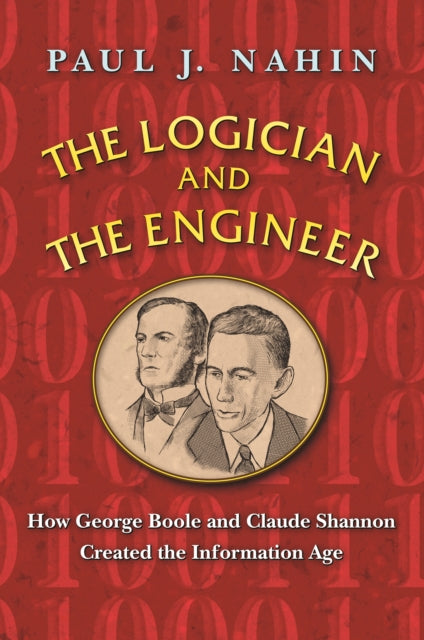
Book SynopsisThird printing. First paperback printing. Original copyright date: 2013.Trade Review"Meshing logic problems with the stories of two extraordinary men ... Paul Nahin fashions a tale of innovation and discovery. Alongside a gripping account of how Shannon built on Boole's work, Nahin explores others key to the technological revolution, from Georg Cantor to Alan Turing."--Nature "Engaging... Nahin assumes some rudimentary knowledge but expertly explains concepts such as relay circuits, Turing machines, and quantum computing. Reasoning through the problems and diagrams will give persistent readers genuine aha moments and an understanding of the two revolutionaries who helped to lay the foundation of our digital world."--Scientific American "Part biography, part history, and part a review of basic information theory, this book does an excellent job of fitting these interlocking elements together."--Library Journal "The reader is taken on a journey from the development of some abstract mathematical ideas through a nearly ubiquitous application of those ideas within the modern world with so many embedded digital computers... I enjoyed the discussion of Claude Shannon. In the history of the computer and development of the internet and World Wide Web, his ideas and contributions are too often overlooked. He is one of my heroes and I believe that everyone that reads this book will come to the same conclusion."--Charles Ashbacher, MAA Reviews "Paul J. Nahin really knows how to tell a good story... The Logician and the Engineer is truly a gem."--New York Journal of Books "A short but fairly detailed exploration of the genesis of Boolean logic and Shannon's information theory... [G]ood background reading for anyone studying electronics or computer science."--Christine Evans-Pughe, Engineering & Technology "Although the book is technical, it is always easily understandable for anyone (for those who need it, some basic rules for electrical circuits are collected in a short appendix). It is not only understandable but also pleasantly bantering and at occasions even facetious."--A. Bultheel, European Mathematical Society "Most valuable to this reviewer, and likely to many potential readers, is the closing chapter, aptly titled Beyond Boole and Shannon. Here is provided an introduction to quantum computing and its logic, possibly portending the future of computers, yet unmistakably bearing the footprints of the two early pioneers. It is an unexpected yet fitting conclusion to this thoroughly enjoyable read."--Ronald E. Prather, Mathematical Reviews Clippings "Nahin has had the very good idea of connecting the very different worlds and times of Boole, Shannon, and others to demonstrate that a little Victorian algebra can turn out to be very useful."--SIAM Review "The exposition is clear and does not assume any prior knowledge except elementary mathematics and a few basic facts from physics. I recommend this well-written book to all readers interested in the history of computer science, as well as those who are curious about the fundamental principles of digital computing."--Antonin Slavik, Zentralblatt MATH "[T]his is a useful and often interesting introduction to the life and work of two intellectual giants who are largely unknown to the general public."--Gareth and Mary Jones, London Mathematical Society Newsletter "The problems are varied and indeed intriguing, and the solutions are delightful."--Mathematics Magazine "This book is not light reading. It would be excellent for advanced high school juniors or seniors with a strong interest in computer science as well as mathematics."--Tom Ottinger, Mathematics Teacher "Nahin leavens the math and engineering with humor and an infectious intellectual curiosity, and the parallels between Boole and Shannon are convincingly drawn... [The Logician and the Engineer] will give your brain a workout, but an enjoyable one."--San Francisco Book ReviewTable of ContentsPreface xi 1 What You Need to Know to Read This Book 1 Notes and References 5 2 Introduction 6 Notes and References 14 3 George Boole and Claude Shannon: Two Mini-Biographies 17 *3.1 The Mathematician 17 *3.2 The Electrical Engineer 28 * Notes and References 39 4 Boolean Algebra 43 *4.1 Boole's Early Interest in Symbolic Analysis 43 *4.2 Visualizing Sets 44 *4.3 Boole's Algebra of Sets 45 *4.4 Propositional Calculus 48 *4.5 Some Examples of Boolean Analysis 52 *4.6 Visualizing Boolean Functions 59 * Notes and References 65 5 Logical Switching Circuits 67 *5.1 Digital Technology: Relays versus Electronics 67 *5.2 Switches and the Logical Connectives 68 *5.3 A Classic Switching Design Problem 71 *5.4 The Electromagnetic Relay and the Logical NOT 73 *5.5 The Ideal Diode and the Relay Logical AND and OR 76 *5.6 The Bi-Stable Relay Latch 81 * Notes and References 84 6 Boole, Shannon, and Probability 88 *6.1 A Common Mathematical Interest 88 *6.2 Some Fundamental Probability Concepts 89 *6.3 Boole and Conditional Probability 96 *6.4 Shannon, Conditional Probability, and Relay Reliability 99 *6.5 Majority Logic 106 * Notes and References 110 7 Some Combinatorial Logic Examples 114 *7.1 Channel Capacity, Shannon's Theorem, and Error-Detection Theory 114 *7.2 The Exclusive-OR Gate (XOR) 122 *7.3 Error-Detection Logic 127 *7.4 Error-Correction Theory 128 *7.5 Error-Correction Logic 132 * Notes and References 137 8 Sequential-State Digital Circuits 139 *8.1 Two Sequential-State Problems 139 *8.2 The NOR Latch 142 *8.3 The Clocked RS Flip-Flop 146 *8.4 More Flip-Flops 154 *8.5 A Synchronous, Sequential-State Digital Machine Design Example 158 * Notes and References 160 9 Turing Machines 161 *9.1 The First Modern Computer 162 *9.2 Two Turing Machines 164 *9.3 Numbers We Can't Compute 168 * Notes and References 173 10 Beyond Boole and Shannon 176 *10.1 Computation and Fundamental Physics 176 *10.2 Energy and Information 178 *10.3 Logically Reversible Gates 180 *10.4 Thermodynamics of Logic 184 *10.5 A Peek into the Twilight Zone: Quantum Computers 188 *10.6 Quantum Logic--and Time Travel, Too! 197 Notes and References 205 Epilogue For the Future: The Anti-Amphibological Machine 210 Appendix Fundamental Electric Circuit Concepts 219 Acknowledgments 223 Index 225
£16.14

Walker & Co Galileos Daughter A Historical Memoir of Science
Book Synopsis
£16.99

Anshan Ltd JOHN MARTIN LITTLEJOHN: An Enigma of Osteopathy
Book Synopsis
£22.99

University of Regina Press The Surprising Lives of SmallTown Doctors
Book Synopsis
£16.14
Johns Hopkins University Press The Papers of Thomas A. Edison
Book SynopsisTable of ContentsCalendar of DocumentsList of Editorial HeadnotesList of MapsPrefaceChronology of Thomas A. Edison, January 1888–December 1889Editorial Policy and User's GuideEditorial SymbolsList of Abbreviations–1– January–March 1888 (Docs. 3128–3172)–2– April–June 1888 (Docs. 3173–3219)–3– July–September 1888 (Docs. 3220–3266)–4– October–December 1888 (Docs. 3267–3304)–5– January–March 1889(Docs. 3305–3338)–6– April–June 1889 (Docs. 3339–3372) 594–7– July–September 1889 (Docs. 3373–3419)–8– October–December 1889 (Docs. 3420–3458)Appendix 1. Edison's Autobiographical NotesAppendix 2. Edison's Draft List of Inventions for Henry VillardAppendix 3. List of Edison's "Dead Experiments for 1888"Appendix 4. Laboratory Experimental Staff, 1888–1889Appendix 5. Edison's U.S. Patent Applications, 1888–1889BibliographyCreditsIndex
£81.18


