
Age groups: the elderly / old age Books

Penguin Books Ltd The Book About Getting Older
Book SynopsisThe honest, compassionate and vital guide to getting older, from dementia to finances, medication to care homes''The most important book about the second half of your life you''ll ever read. I wish everyone in the UK could be under Dr Lucy''s care'' SANDI TOKSVIG''This warm and compassionate book gets to the heart of older age'' THE BRITISH GERIATRICS SOCIETY________Now more than ever, we need to talk about getting older.Many of us are living to a very great age. But how do we give those we love, and eventually ourselves, long lives that are as happy and healthy as possible?Dr Lucy''s book gives us answers to the questions we can voice - and those that we can''t. This essential guide will guide you through those important conversations around growing older, answering every question you might have, including: How do we start the conversation? How do we ask whether it''s worth taking seveTrade ReviewThe most important book about the second half of your life you'll ever read. I wish everyone in the UK could be under Dr Lucy's care, but this is the next best thing * Sandi Toksvig *This warm and compassionate book gets to the heart of older age. Using stories and accessible explanations, it covers issues of declining health, quality of life and choices about the things that matter most. The BGS is delighted to endorse this universally relevant and approachable exploration of what it means to get older * The British Geriatrics Society *Dr Lucy Pollock offers useful tips about thorny subjects such as choosing medications and identifying dementia * Independent, 'Books of the Month' *Dr Pollock writes with spirit and empathy, making this an engaging and thought-provoking read. Anyone struggling with old age will feel less alone for having Dr Pollock on their team * Sunday Express *Serious, funny, kind and knowledgeable, this book helps guide us through essential conversations about issues of getting older * Eastern Daily Press *Terrific . . . I suggest we all get a copy of Dr Lucy's book * Evening Standard *Interesting and engaging . . . Eminently readable prose. The tone throughout is warm and friendly, even as serious and dark subjects are under discussion. It is an important book * Irish Times *Wise, compassionate, well researched and very broad in its coverage. I've learnt a lot that will help me both as a doctor and a patient. Thank you -- Dr Phil HammondKind, touching and, at times, achingly funny. An enlightening - and important - read whatever your age. Dr Lucy Pollock is just the kind of healthcare professional you want by your side * Waitrose Weekend *A brilliant book . . . We all know the statistics. We are an ageing population and we are going to be having these chats over and over again. [The Book About Getting Older] is a very good starting point -- Ray D'Arcy * RTE Radio 1 *Serious, at times funny, but also kind and knowledgable * Hertfordshire Life *A lovely, thoughtful, caring and informative book which will help very many people -- Ed BallsInclude in 'Health solutions for your mind and body' * Woman's Weekly *
£10.44

Octopus A Short Guide to Your Long Life
Book SynopsisA prominent US gerontologist''s practical, science-based guide to aging wellGrowing old in today''s society is daunting. The core message of this book is that losing your quality of life as you age is not inevitable. You can live a great life all the way to the end by leveraging what older you does better. By the end of this book, your fear of aging will be replaced with confidence that you will know how to age into the best version of yourself.A Short Guide to Your Long Life is the practical guide readers have been looking for. A rich body of evidence confirms that a number of strengths peaks with age: judgment, empathy, patience, and appreciation. Older you will have better problem-solving skills, more resilience, and a deeper and more robust spiritual life. When you harness these strengths, growing older becomes an era of expansion rather than contraction. In a society that can you make you feel invisible, staying vital requires you to stay visible to yourself so that you uncover the strengths and fullness of your life.
£15.29

Octopus Publishing Group Instagran: When Old People and Technology Collide
Book Synopsis'What channel is Netflix on?'Modern technology can be daunting, especially if you're a silver surfer. How are you supposed to remember your wifi password when you can't even remember where you left your glasses? Whether you're struggling with social media or wrestling with your word processor, you'll find plenty to laugh about in the browser blunders and phone fails of Instagran.
£7.59

Icon Books The Marmalade Diaries: The True Story of an Odd
Book Synopsis'Charming, touching and very very funny' Jenny Colgan'Simply too good' Daily MailFrom the author of the Times bestselling A Chip Shop in PoznanONE HOUSE. TWO HOUSEMATES. THREE REASONS TO WORRY: WINNIE AND BEN ARE SEPARATED BY 50 YEARS, A GULF IN CLASS, AND MAJOR DIFFERENCES OF OPINION.When hunting for a room in London, Ben Aitken came across one for a great price in a lovely part of town. There had to be a catch. And there was. The catch was Winnie: an 85-year-old widow who doesn't suffer fools.Full of warmth, wit and candour, The Marmalade Diaries tells the story of an unlikely friendship during an unlikely time. Imagine an intergenerational version of Big Brother, but with only two contestants. One of the pair a grieving and inflexible former aristocrat in her mid-eighties. The other a working-class millennial snowflake. What could possibly go wrong? What could possibly go right?Out of the most inauspicious of soils - and from the author of The Gran Tour - comes a book about grief, family, friendship, loneliness, life, love, lockdown and marmalade.Trade ReviewCharming, touching and very very funny * Jenny Colgan *Displays a keen eye for the humour of everyday life ... underneath it all is the wonderful story of two people born half a century apart, learning lessons from each other. * Daily Mail *
£10.44

Oneworld Publications Travels with Epicurus: Meditations from a Greek
Book SynopsisOur society worships at the fountain of youth. Each year, we try to delay the arrival of old age, using everything at our disposal, from extreme exercise and botox to pilates and cosmetic dentistry. But in the process, are we missing out on a distinct and extraordinarily valuable stage of life? Asking whether it is better to be forever young or to grin toothlessly and live an authentic old age, bestselling author Daniel Klein journeys to the Greek island of Hydra. There he draws on the lives of octogenarian Greek locals, as well as philosophers ranging from Epicurus to Sartre, to discover the secrets of ageing happily. An escapist travel memoir, a droll meditation, and an optimistic guide to living well, this is a delightful jaunt through the terrain of old age, led by a witty and uniquely perceptive modern-day sage.Trade ReviewIt’s an affectionate portrait of the island [of Hydra] but is really a primer on making the most of life’ * Daily Telegraph, best books of 2014 *'I was bowled over by its easy charm and hard-won wisdom.' * Daily Mail *'Charming and intelligent. I enjoyed this book very much.' -- Diana Athill'Wry, whimsical, amusing and intelligent.' * Daily Telegraph *'Charming and accessible, this philosophical survey simply and accessibly makes academic philosophy relevant to ordinary human emotion.' * Kirkus Reviews *'An insightful meditation.' * The New York Times *'Both seduces and delights.' * Scotsman *'Klein's narrative is a delightful and spirited conversation, offering up the ingredients inherent to the art of living well in old age.' * Publishers Weekly *'Funny and wry.' * Huffington Post *
£9.86

Octopus Publishing Group Old Age for Beginners: Hilarious Life Advice for
Book SynopsisIt's time to embrace the slower pace!There's no denying it - you're OLD, but that comes with a lot of perks. You can say the most outrageous things and somehow get away with it. You can dress however you damn well please. And after learning from so many mistakes, you're now as wise as you are wizened. It's your time to recline, and this hilarious book will show you how it's done.
£7.59

£21.10

Penguin Books Ltd Grandma Tell Me
Book Synopsis
£16.14

Baywood Publishing Company Inc Critical Perspectives on Aging The Political and Moral Economy of Growing Old Policy Politics Health and Medicine Series
Book SynopsisThis unique volume brings together 20 critical essays on aging within the context of the broad social, political, and economic factors that help shape and determine the realities of growing old. Rather than viewing aging in isolation, it explores the social creation of old age dependency and the profound influence of race, gender, and social class on what it means to grow old. It looks too at such topics as the biomedicalization of aging; the role of business and the media in changing societal images of the old; the fact and fiction behind senior power; the multibillion dollar nursing home industry; and the role of advanced capitalist nations in creating economic dependency among elders in the Third World.Table of ContentsIntroduction: The Unique Contributions of This Volume Vicente Navarro Part I: Introduction Overview Meredith MinklerThe New Political Economy of Aging: Introduction and Critique Carroll L. EstesPolitical and Moral Economy: Not Such Strange Bedfellows Meredith Minkler and Thomas R. ColeDependency or Empowerment? Toward a Moral and Political Economy of Aging Jon Hendricks and Cynthia A. Leedham Part II: New Images of the Old and the Debate over Resource Allocation "Generational Equity" and the New Victim Blaming Meredith MinklerGold in Gray: Reflections on Business' Discovery of the Elderly Market Meredith MinklerA Lamb in Wolf's Clothing? The Reality of Senior Power and Social Policy Steven P. Wallace, John B. Williamson, Rita Gaston Lung, and Lawrence A. Powell Part III: Apocalyptic Demography and the Biomedicalization of Aging The Biomedicalization of Aging: Dangers and Dilemmas Carroll L. Estes and Elizabeth A. BinneyThe Politics of Alzheimer's Disease: A Case Study in Apocalyptic Demography Ann Robertson Part IV: Critical Perspectives on Market Economy Health Care The Nursing Home Industry: A Structural Analysis Charlene HarringtonThe Political Economy of Mental Health Care for the Elderly Elizabeth A. Binney and James H. SwanThe Short Life and Painful Death of the Medicare Catastrophic Coverage Act Martha Holstein and Meredith Minkler Part V: Race, Class, Gender, and Aging Older Women in the Post-Reagan Era Terry Arendell and Carroll L. EstesCommunity Care Policies and Gender Justice Suzanne E. England, Sharon M. Keigher, Baila Miller, and Nathan L. LinskGender, Race and Class: Beyond the Feminization of Poverty in Later Life Paula L. DresselThe Political Economy of Health Care for Elderly Blacks Steven P. Wallace Part VI: Retirement, Social Security, and Economic Dependency Retirement and the Moral Economy: An Historical Interpretation of the German Case Martin KohliPostwar Capitalism and the Extension of Social Security into aRetirement Wage John MylesDependency among Third World Elderly: A Need for New Direction in the Nineties Sheila M. Neysmith Part VII: Conclusion Future Prospects for Aging Policy Reform Judith Shindul-Rothschild and John B. WilliamsonEpilogue Carroll L. EstesContributors Index
£64.99

Baywood Publishing Company Inc Critical Perspectives on Aging The Political and Moral Economy of Growing Old Policy Politics Health and Medicine Series
Book SynopsisThis unique volume brings together 20 critical essays on aging within the context of the broad social, political, and economic factors that help shape and determine the realities of growing old. Rather than viewing aging in isolation, it explores the social creation of old age dependency and the profound influence of race, gender, and social class on what it means to grow old. It looks too at such topics as the biomedicalization of aging; the role of business and the media in changing societal images of the old; the fact and fiction behind senior power; the multibillion dollar nursing home industry; and the role of advanced capitalist nations in creating economic dependency among elders in the Third World.Table of ContentsIntroduction: The Unique Contributions of This Volume Vicente Navarro Part I: Introduction Overview Meredith MinklerThe New Political Economy of Aging: Introduction and Critique Carroll L. EstesPolitical and Moral Economy: Not Such Strange Bedfellows Meredith Minkler and Thomas R. ColeDependency or Empowerment? Toward a Moral and Political Economy of Aging Jon Hendricks and Cynthia A. Leedham Part II: New Images of the Old and the Debate over Resource Allocation "Generational Equity" and the New Victim Blaming Meredith MinklerGold in Gray: Reflections on Business' Discovery of the Elderly Market Meredith MinklerA Lamb in Wolf's Clothing? The Reality of Senior Power and Social Policy Steven P. Wallace, John B. Williamson, Rita Gaston Lung, and Lawrence A. Powell Part III: Apocalyptic Demography and the Biomedicalization of Aging The Biomedicalization of Aging: Dangers and Dilemmas Carroll L. Estes and Elizabeth A. BinneyThe Politics of Alzheimer's Disease: A Case Study in Apocalyptic Demography Ann Robertson Part IV: Critical Perspectives on Market Economy Health Care The Nursing Home Industry: A Structural Analysis Charlene HarringtonThe Political Economy of Mental Health Care for the Elderly Elizabeth A. Binney and James H. SwanThe Short Life and Painful Death of the Medicare Catastrophic Coverage Act Martha Holstein and Meredith Minkler Part V: Race, Class, Gender, and Aging Older Women in the Post-Reagan Era Terry Arendell and Carroll L. EstesCommunity Care Policies and Gender Justice Suzanne E. England, Sharon M. Keigher, Baila Miller, and Nathan L. LinskGender, Race and Class: Beyond the Feminization of Poverty in Later Life Paula L. DresselThe Political Economy of Health Care for Elderly Blacks Steven P. Wallace Part VI: Retirement, Social Security, and Economic Dependency Retirement and the Moral Economy: An Historical Interpretation of the German Case Martin KohliPostwar Capitalism and the Extension of Social Security into aRetirement Wage John MylesDependency among Third World Elderly: A Need for New Direction in the Nineties Sheila M. Neysmith Part VII: Conclusion Future Prospects for Aging Policy Reform Judith Shindul-Rothschild and John B. WilliamsonEpilogue Carroll L. EstesContributors Index
£82.99

Octopus Publishing Group The Little Instruction Book for Grandparents:
Book SynopsisThe perfect gift for new grandparents, packed with humorous tips and tongue-in-cheek advice on how to look after the newest additions to the familyJust when you thought your children were off your hands... along come the grandchildren! It's time to wave goodbye to that fleeting peace and quiet and say hello to a world you remember all too well.But wait - everything is different now! Who is going to teach you how to operate the over-complicated car seat, or help you solve the perennial problem of how to change a loaded nappy with just one wet wipe? Because, let's be honest, things aren't what they used to be.Packed with comical illustrations and amusing tips, this indispensable handbook is here to guide you through the pleasures and pitfalls of grandparenthood. Most importantly, though, it'll teach you how to keep the grandkids quiet while you catch up on your nap-time.
£7.59

HarperCollins Publishers Extra Time 10 Lessons for Living Longer Better
Book SynopsisAn inspirational call to arms' DAILY MAILThis book is so sensible, so substantially researched, so briskly written, so clear in its arguments, that one wishes Baroness Cavendish was still whispering into the prime ministerial ear' THE TIMESA thoughtful handbook to help societies age gracefully' FINANCIAL TIMESThis bold, visionary book is a wake-up call to governments. It is a wake-up call to us all' SUNDAY TIMESFrom award-winning journalist, Camilla Cavendish, comes a profound analysis of one of the biggest challenges facing the human population today.The world is undergoing a dramatic demographic shift. By 2020, for the first time in history, the number of people aged 65 and over will outnumber children aged five and under. But our systems are lagging woefully behind this new reality. In Extra Time, Camilla Cavendish embarks on a journey to understand how different countries are responding to these unprecedented challenges.Travelling across the world in a carefully researched and deepTrade Review ‘Extra Time should perhaps be called “About Time” because it is a long overdue and brilliant counterpoint to all those pervasive arguments that our ageing societies will be poorer and sadder. Growing old, as individuals and nations, need not mean growing frailer and duller. Camilla Cavendish has written an empowering and important manifesto for how an older society can be a better society.’ ROBERT PESTON ‘In this remarkable and frequently optimistic book Camilla Cavendish sets out what is part warning and part redefinition of what it is to live longer. Her statistics and her observations of how different rich and poor will age are breathtaking. But it is above all her bravery in challenging our very notions of ageing that makes this a must read book for all those struggling to understand the enormity of change that longer life now brings.’ EMILY MAITLIS ‘Extra Time by Camilla Cavendish is an optimistic, uplifting and practical book about the huge potential for humans to live not just longer lives, but more fulfilling lives. An inspiring and essential read.’ ARIANNA HUFFINGTON, FOUNDER & CEO, THRIVE ‘A brilliant analysis of how to live longer better’ SIMON JENKINS ‘As deeply inspirational as it is informative. If you want to know how to live a long, vibrant life, Extra Time is a must read’ DR DAVID SINCLAIR ‘Demographic change is the most neglected shaper of our future. Camilla Cavendish has written the most interesting, perceptive and iconoclastic guide to its many implications. This is a truly important book’ LAWRENCE SUMMERS, President Emeritus and Charles W. Eliot University Professor of Harvard University
£10.44

Columbia University Press Home and CommunityBased Services for Older Adults
Book SynopsisAs older adults and their families opt out of nursing homes, a range of home and community-based services have risen up to provide care. This book examines existing and emerging models of these services. Emphasizing the multidisciplinary and interprofessional practice approaches used to deliver care, it is an essential learning tool.Trade ReviewPresenting a welcomed and needed comprehensive examination of home and community services—which has received insufficient attention until now—Anderson, Dabelko-Schoeny, and Fields offer a historical and contemporary understanding of this critical life space. Students, practitioners, policy makers, and other stakeholders in the health professions will learn fundamentals and gain new passion for assuring that health and care come home. -- Laura N. Gitlin, Drexel UniversityAmericans overwhelmingly desire to live at home in their communities as they grow older, especially those with chronic health conditions and daily living challenges who often fear ending up in institutions away from loved ones and friends. Home- and Community-Based Services for Older Adults is an essential primer for those working across the care continuum and seek to deliver person-centered support so that all of us can live well in the place we call “home." -- Gretchen Alkema, The SCAN FoundationThe authors have masterfully integrated information from a broad range of sources and distilled it into a well-researched, well-organized, well-written, and well, swell book that provides sound historical context, contemporary policy and practice implications, and a peek at the future. -- Mercedes Bern-Klug, University of IowaThis book could fill a gap in student education regarding her or his future professional opportunities and experiences. It is useful to have such depth provided on HCBS, as these are often embedded across content or covered in one to several chapters among other texts. The book is well written and accessible to readers at multiple levels of education. -- Marla Berg-Weger and Cara Wallace, St. Louis UniversityThis volume offers a timely treatment of an evolving, complex social phenomenon. * Choice *Table of ContentsAcknowledgments1. Introduction2. Policies Related to Home- and Community-Based Services, by Amanda J. Lehning3. The Older Americans Act and the Aging Network4. Multidisciplinary and Interdisciplinary Practice Skills Across Home- and Community-Based Services Settings5. Family Caregiving6. Home Health Care 7. The Village Concept and Naturally Occurring Retirement Communities 8. Home-Based Primary Care 9. Assisted Living and Housing with Services 10. Adult Day Services11. Hospice in Community Settings 12. International Perspectives on Home- and Community-Based Services13. Technology in Home- and Community-Based Services Afterword: A Commentary on the Future of Home- and Community-Based Services, by Joseph E. GauglerGlossaryIndex
£75.00

Bristol University Press Care for Older Adults in India
Book SynopsisIndia's ageing population is growing rapidly. This book examines living arrangements across India and their impact on the provision of care for older adults in India.Table of Contents1. Introduction: Living Arrangements and Care in India – Ajay Bailey, Martin Hyde and K. S. James 2. Theorising Care and Relationships in the Age of Migration – Ajay Bailey and Martin Hyde 3. Emerging Living Arrangements of Older Adults in India: Patterns and Welfare Implications – K S James and Sanjay Kumar 4. Living Arrangement Concordance and the Well-being of Older Persons in India – T. S. Syamala, Verma Supriya and Sebastian Joseph 5. Family Size and Living Arrangements Among Older Adults in Kerala: Panel Data Analysis, 2004–2019 – S. Irudaya Rajan and S. Sunitha 6. Care Arrangements for Older Adults: Exploring the Intergenerational Contract in Emigrant Households of Goa, India – Allen P. Ugargol, Ajay Bailey, Inge Hutter and K.S. James 7. All My Responsibilities Towards My Children Are Over! Linked Lives and Life Course Obligations Among Older Adults With Migrant Children in India – Ajay Bailey, K. S. James, and Jyoti Hallad 8. Interpreting the Landscapes of Care for Older Men in Delhi and Kolkata: Perspectives From Care Receivers and Caregivers – Selim Jahangir, Ajay Bailey and Anindita Datta 9. The Role of Cultural Meaning System and Place Attachment in Retaining Home Ownership While Residing in Retirement Homes in Kerala, India – Nikhil Pazhoothundathil, Ajay Bailey, and Inge Hutter 10. Decision-Making and Choice or Sine qua Non? Care Home Entry in Tamil Nadu – Vanessa Burholt, R. Maruthakutti and Carol A. Maddock 11. Welfare and Development Programmes for Older Adults in India – S. Siva Raju 12. Lessons and Future Directions for Caregiving Research in India – Martin Hyde, Ajay Bailey, and K. S. James
£25.64

Crumps Barn Studio Brocading the Verse: loss and redemption in the
Book Synopsis"Memories like autumn leaves blow across my path, seeking refuge in their own dark space" Solitary, beautiful, lyrical - Julie Wiltshire weaves a tapestry of loss, grief and redemption in the Cotswold landscape. Original poetry in a stunning new collection
£7.59

Octopus Publishing Group The Little Book of Senior Moments: A Timeless
Book SynopsisYou know you're having a senior moment when you decide it's time to pull up your socks - and realize you forgot to put any on! Age is just a number and you're only as old as you feel, but if you're heading into your golden years and you're certifiably "no spring chicken", you might benefit from browsing through the pages of this tongue-in-cheek book to help you decide if your marbles just need a polish or you've well and truly lost them! Inside you'll find examples of classic "senior moments", such as:- Ringing a friend to ask them for their phone number. - Getting annoyed at the fact that your all-in-one remote won't open your garage door. - Going to the store for milk and coming home with a new dog collar, rawl plugs, some plant pots that were on special offer... but no milk. - Feeling frustrated by your computer's instructions to "press any key", when there's no "Any" key on your keyboard. With a sprinkling of reassuring quotes from fellow old-timers, this collection will help you see the funny side of getting older (but not necessarily wiser).
£6.99

Little, Brown Book Group United
Book Synopsis''A beautiful and moving book that vividly brings home the challenges faced by those with dementia and their carers'' Sir Tony RobinsonA moving and beautifully illustrated book that captures the real life tales of people living with dementia, as told by their loved ones caring for them.This humorous, heartwarming and often heartbreaking collection will be relatable and supportive for anyone touched by dementia in their lives, and provides insight and information for anyone wanting to know more.The stories reflect on: the impact of receiving a diagnosis, the importance of person-centred care and social inclusion; the power of meaningful engagement, partnerships, peer support and much, much more.Trade ReviewA beautiful and moving book that vividly brings home the challenges faced by those with dementia and their carers -- Sir Tony RobinsonI would highly recommend this book ... Beautiful illustrations and moving stories -- Vicky McClureI know of no other book in the dementia field ... In seven deftly distilled life stories, each vividly illustrated to animate key moments in the narrative, Awad identifies the essential, take-home lessons of caring for a person with cognitive impairments in a variety of unique circumstances ... This book simultaneously instructs and inspires. In one sitting, one can gain a lifetime of insights -- Michael Verde, founder of Memory Bridge USAFrom the devastating moment of diagnosis to the years of isolation, grief and frustration, Gina Awad's book is a must-read for all those caring for someone with dementia. Wonderfully illustrated by renowned cartoonist Tony Husband, it is easy to read yet exceptionally informative. Both Awad and Husband have personal experience of this cruel condition and it shows. United is a book written with love, gentle humour and fathomless insight. I can't recommend it highly enough -- Pippa Kelly, award-winning dementia campaigner, journalist and podcasterWhat a compelling read, so skilfully written and with a deep understanding of the condition. The insight and 'tips' were invaluable and many chimed with me as challenges (and opportunities!) I faced with my own mum. An excellent piece of work -- Kate Lee, Chief Executive Officer, Alzheimer’s SocietyA beautiful, stunning way to communicate the complexity of dementia while offering subtle tips on how we can understand how a person experiences the world and what we can do to help. United shows how life doesn't stop when someone has dementia but also stresses the importance of relationships and what has helped people, such as connecting with dementia-related charities and communities. The diversity of experience is beautifully illustrated, leaving the reader immersed in the worlds of the individuals in the book. Highly emotive, memorable and informative; a very much needed book -- Dr Jane Mullins, dementia nurse specialist, author of 'Finding the Light in Dementia'United is THE most beautiful and impactful piece of work. I read it with tears in my eyes, not due to sadness, but due to overwhelming relief that finally all our journeys are now clearly and lovingly explained. Gina Awad has masterly woven the stories together and it makes for a very powerful read. She is a magician and I hope that those who find this book will extract the sense of hope from it at a time when all seems quite overwhelming -- Nicola Baker, daughter of Michael and Pam who both lived with dementiaThis lovely book brings to life the lived experiences of people with dementia and carers. These personal stories portray the reality of living with dementia but each situation is peppered with hope, optimism and love -- Rachael Litherland, director of Innovations in DementiaWhen dementia comes into your family, it changes life forever. This book, with its wonderful illustrations, is a helpful reminder that we are not alone. There are so many stories of people struggling along, trying to find some light even in the darkest of times. We should be proud as carers and people living with dementia that we are somehow muddling though. I hope this book raises awareness of all our journeys, all different but somehow connected -- Suzy Webster, daughter and carer of her mum Barbara, diagnosed with Alzheimer's in 2012We make sense of our lives using interlocking stories. In this book, Gina Awad has captured a series of vignettes, sharing stories of the lives of people living with dementia and their families. Sympathetically and extensively supported with illustrations by Tony Husband, United all too clearly demonstrates the hopes, fears, frustrations and disappointments and alerts us so clearly to the impact dementia has on the lives of so many people -- Dr David Kernick, GPAs a former carer myself, I know that nothing impacts quite as much as reading about the lived experience of those caring for a loved one with dementia. The fact that all the stories not only showcase, sensitively, the challenges and issues surrounding a dementia diagnosis, but that they also highlight positive outcomes and illustrate practical solutions, with love, care and commitment running as a common thread through all of them, is heartwarming -- Sarah Merriman, head of TIDE (Together In Dementia Everyday) deliveryWhile this book does not skirt the difficulties of living with a diagnosis of dementia, it reminds us of what is most important in all relationships: empathy; caring; understanding; love and, for our carers, support and resilience. In this short but poignant book, Gina's words and Tony's illustrations beautifully and sweetly convey all of the above. This is a moving and highly effective format for raising awareness of some of the most difficult and painful issues while constantly affirming and nurturing the personhood of the people living with dementia and their carers -- Lynda Everman and Don Wendorf, PsyD, former caregivers, Alzheimer’s activists, senior editors of 'Dementia-Friendly Worship' and co-authors of 'Stolen Memories'This delightful and empowering book highlights how each person with dementia and their loved ones experience their own individual dementia encounter. It is a thought-provoking read and offers readers with no experience of dementia the opportunity to enter into the dementia world. For those that may have experience but struggle in a caring role, it offers hope and reassurance by providing practical tips and coping strategies ... A mesmerising read around the realities and challenges for all those affected by dementia and illustrated beautifully in cartoon form by the brilliant Tony Husband -- Lorraine Burgess, Macmillan dementia nurse consultantThis beautiful book ... helps to give a slice of life for carers, families and those living with the disease ... By reading stories of others with warm, light illustrations to accompany them, we get an insight into real people and real situations. It will help elucidate to those who feel isolated dealing with dementia whilst reassuring them that there are others in the same boat. It hints at what is to come but it reminds us that, for the most part, dementia doesn't rob us of everything. There is hope and unity in shared memories and experiences -- Denise Wilton, daughter and carer for her father living with dementiaUnited is a must read for any one who has a connection with someone living with dementia and for any one who hasn't, because the more information we know, the better our world can become more inclusive. This book is written with gentleness and honesty and the illustrations are super. Humility and humour go hand in hand in this book. It is wonderful -- Philippa Hodge, dementia trainer and carerThis book is beautiful to read; it is light, informative and through its narrative and pictures, it manages to encompass so many different experiences and challenges for the person living with dementia and for the carer ... This book is a brilliant resource and a reminder of the need for person-centred support - whether that's for the needs of the person with dementia or their carer. It's a book you can pick up again and again and be reminded of new ways of doing things and ways to adapt to an everchanging situation -- Sue Hinds, head of services, Dementia Carers CountThe word or feeling that most strongly comes across from the book is 'heart'; there are moments of anguish and sadness, alongside stories of deep love and compassion ... The stories are expressed with such sensitivity, warmth and humanity through a combination of word and image. They capture some of the issues that, as an occupational therapist, I saw time and time again ... I think this book will be an immensely helpful source of support to those caring for loved ones living with dementia. It has such universal appeal; I'd like to see it being made available to carers of those recently diagnosed with dementia, to schoolchildren, health and care students - everyone should read it! -- Carrie Clarke, retired NHS occupational therapist (dementia services)This is a must read book for anyone connected with dementia in any way. Beautifully illustrating the stories of people with dementia, their families and carers, the book is full of thoughtful insights into the opportunities and challenges of living with dementia. ... The many different perspectives in the individual stories chimed in so many ways for me. It is an incredibly special book that will be of great help and comfort to many -- Jennie Stephens MBEI can totally relate to every story in [United] and to the hardships that carers go through ... I am so impressed how it kept my attention and was transfixed throughout with humour and heartache, because that is exactly what dementia is all about, highs and lows. Everyone that has dementia and those who have yet to be diagnosed, as well as their carers, need to read this book to give them hope and inspiration -- Tommy Dunne BEM, dementia activist and campaigner diagnosed with young onset dementia in 2011, aged 58A wonderful book full of powerful stories that are engaging and insightful. A must-read for families and carers impacted by dementia -- Alex Winstanley, award-winning children’s author of ‘My Grandma Has Dementia'United is a wonderful little book about dementia, containing real stories about the condition and how it impacts relationships, all beautifully illustrated with care and empathy. The book is heart-breaking and poignant, revealing the devastation that this progressive, neurodegenerative and incurable condition brings to families. It is also informative and uplifting, with tips on how to help those with dementia and those who provide care, from medication to music to respite care, bringing hope and sometimes moments of joy. Overall, it is a moving book about love, care and connection -- Professor Victoria Tischler, University of ExeterThe beauty of this book is in part due to the illustrations, which capture your interest and imagination effortlessly, and in part due to the very real, very honest and heart-touching stories shared within the pages. Each story offers the reader so much: a different window through which to view the realities of life with dementia, from the highs to the lows, from the creative use of technology and the evident love to the struggles and challenges that are all too familiar. This book really does illustrate perfectly how if you love someone living with dementia, you are living with it too -- Vic Lyons, Dementia UK[United] is a delight, showing the lengths that families go to protecting their loved ones as the disease progresses. The beautiful illustrations bring it to life! Dementia has no boundaries and the book deals with sporting injury, ethnicity, problems of caring and mindful techniques to alleviate stress. It also highlights the difficult lives of carers who are giving their all in a world recently shattered by the diagnosis and the devastating change that brings ... United gives a balanced look into the lives of families dealing with dementia and shows that, if you learn about dementia, take advice and find your own unique ways to respond to situations, there is much joy to be found -- Jane Moore, co-founder, Purple Angel Global Dementia AwarenessA really well thought-through marriage of narratives with supporting illustration ... I can see how this book could provide a non-threatening but still very informative and insightful introduction for anyone who may be just beginning their journey as a care partner, family or friend to a person with dementia ... At the heart of the book is a very welcome emphasis on diversity and a message about the importance of inclusivity when it comes to care and support. All too often in dementia care policy and practice we talk of 'people with dementia' as a singular category and this book challenges that thinking and approach while reminding us of some of the shared and even universal aspects to living with dementia -- Dr Richard Ward, senior lecturer in dementia studies, University of StirlingGives poignant insights into the lives of people affected by dementia. The short stories capture some of the challenges, difficult decisions, rewards and happy memories, while providing useful knowledge for others embarking on this journey. The experience of caring for someone living with dementia can be isolating. These sensitively illustrated personal accounts demonstrate that you're not on your own -- Julia Powell, former carer of mum, JuneTurns a poignant, sad subject into an emotional, encompassing journey of love and, dare I say, hope ... United shows that hope to the world and to those who need that bit of reminding that they are not alone -- Ann Smith, caring for Maureen SmithMovingly told and illustrated stories of caring and dementia experience. This heartfelt sharing opens up space for compassion and connection; so important for carers and people living with dementia -- Dr Martha Pollard, dementia/care researcher, counsellor, and daughter in family affected by dementiaWhat a delightful and touching experience ... United is such an accessible window into the lived experience ... not only for carers but for those living with dementia as well -- Ryan Harrison, Executive Director, Center for Older Adult Community Health, California
£10.44

Springer Nature Switzerland AG Economics and Ageing: Volume IV: Political
Book SynopsisThis upper level textbook provides a coherent introduction to the economic implications of individual and population ageing. Placing economic considerations into a wider social sciences context, this is ideal reading not only for advanced undergraduate and masters students in health economics and economics of ageing, but policy makers, professionals and practitioners in gerontology, sociology, health-related sciences, and social care.This volume introduces topics in the economics of happiness, quality of life, and well-being in later life. It also covers questions of inequality and poverty, intergenerational economics, and housing. Other areas described in this book include behavioural economics, political economy, and consumption in ageing societies.Table of ContentsI Economics of happiness and quality of life1 Conceptualisations and measurement1.1 Utility1.2 Welfare1.3 Subjective and objective well-being1.3.1 Subjective well-being1.3.2 Objective well-being1.4 Psychological well-being1.5 Optimal well-being1.6 Happiness1.7 Human development1.8 Quality of life1.8.1 CASP-191.8.2 Long-term care1.8.3 Health care1.8.4 Community quality of life2 Theories and empirical findings2.1 Comparison theories2.2 Easterlin paradox2.3 Set-point, adaptation-level, and the hedonic treadmill2.4 Personality traits and genetics2.5 Needs-based theories2.6 Inequality and happiness2.7 Happiness along the life cycle3 Happiness and policy3.1 Gross National Happiness3.2 National Accounts of Well-being3.2.1 Time-based national well-being accounts3.3 Happy life expectancy or happy life years3.3.1 Inequality of Happiness3.4 Closing thoughtII Inequality and Poverty4 Inequality4.1 Introduction4.2 Distribution and moral theory4.2.1 Value claims4.2.2 Moral desert4.2.3 Utilitarianism4.2.4 Libertarianism4.2.5 Contractualism4.2.6 Capabilities4.2.7 Consequentialist and deontological approaches4.3 Measurement of distribution and inequality4.3.1 Inequality of whom?4.3.2 Inequality of what?4.3.3 Measures of inequality4.4 Population ageing and distributional issues4.5 Intergenerational transmission of inequality5 Poverty, deprivation and social class5.1 An embarrassment of definitional riches?5.1.1 Equivalisation5.1.2 Absolute poverty5.1.3 Relative poverty5.1.4 Multidimensional approaches5.1.5 Mortality-adjusted poverty rates5.1.6 Subjective poverty5.1.7 Financial distress5.1.8 Financial security5.1.9 Chronic or persistent poverty5.2 Theories of Poverty5.2.1 Individualist approaches5.2.2 Structuralist approaches5.2.3 Intergenerational income elasticity5.2.4 Equal burden-sharing5.2.5 The Great Gatsby curve5.2.6 Anti-poverty role of pension income in low-income developingcountries5.3 Social class and later life6 Some questions of intergenerational economics6.1 Intergenerational transfers6.2 Intergenerational mobility6.2.1 Multigenerational mobility6.3 Justice between generations6.3.1 Prudential lifespan6.3.2 Fair innings6.4 Equity, solidarity, conflict, and ambivalence6.4.1 Generational equity6.4.2 Generational interdependence and solidarity6.4.3 Generational contract6.4.4 Intergenerational ambivalence6.5 Indices of intergenerational fairness6.5.1 The Intergenerational Fairness Index6.5.2 Intergenerational Justice Index7 Ageing, house prices, and economic crises7.1 Introduction7.2 Residential mobility in later life7.2.1 Ageing, moving, and house prices7.2.2 Housing-related financial products7.3 Housing and poverty in later life7.3.1 Housing and risk in later life7.4 Housing and pensions7.4.1 Housing income and public spending on older people7.4.2 Housing and the retirement decisionIII Behavioural Economics and Ageing8 Behavioural economics and individual ageing8.1 Prospect theory8.2 Framing effects8.3 Anchoring effect8.4 Priming8.5 Sunk cost effect8.6 Mental accounting8.7 Myopia8.8 Lack of willpower8.9 Complexity8.10 Same findings, other approaches9 Behavioural economics and policy9.1 Libertarian paternalism9.1.1 Nudge9.2 Constitutionally constrained paternalism9.3 Autonomy-enhancing paternalism9.4 Asymmetric paternalism9.5 The Save More Tomorrow TM programmeIV Political Economy10 Economics and the political economy of ageing10.1 Introduction 10.2 Political economy of ageing -the orthodox economicsview10.2.1 Population ageing and the median voter model10.2.2 Elderly power and fiscal leakage10.2.3 Interest group models11 Gerontological views11.1 Political gerontology11.2 Social gerontology and the political economy of ageingV The silver economy12 The silver economy12.1 Introduction12.2 The ageing’ consumer12.2.1 Demand-driven market segmentations12.2.2 Other market segmentations12.3 The retirement-consumption puzzle12.4 Ageing and the consumer society12.4.1 Successful ageing and the consumer society12.4.2 Affluenza
£52.49

Penguin Young Readers My Mothers Money
£15.29

Springer International Publishing AG Economics and Ageing: Volume I: Theory
This upper level textbook provides a coherent introduction to the economic implications of individual and population ageing. Placing economic considerations into a wider social sciences context, this is ideal reading not only for advanced undergraduate and masters students in economics, health economics and the economics of ageing, but also policy makers, students, professionals and practitioners in gerontology, sociology, health-related sciences and social care.This volume introduces the different conceptualisations of age and definitions of `old age', as well as the main theories of individual ageing as developed in the disciplines of biology, psychology and sociology. It covers the economic theories of fertility, mortality and migration and describes the four main frameworks that can be used to study economics and ageing, namely the life cycle, the overlapping generations, the perpetual youth and the dynastic models.
£52.49

Bohn,Scheltema & Holkema,The Netherlands In Mijn Koffer Op Zolder: Levensverhalen Van
Book Synopsis
£999.99

Bristol University Press Critical Gerontology for Social Workers
Book SynopsisThis original collection explores how critical gerontology can make sense of old age inequalities to inform social work research, policy and practice. Engaging with key debates on age-related human rights, the conceptual focus addresses the current challenges and opportunities facing those who work with older people.Trade Review“This book will help prepare future generations of social workers to serve and advocate for the older adult population. I highly recommend this book to social workers with an interest in working with older adults or those educating future social workers to practice in the aging field.” Journal of Gerontological Social WorkTable of ContentsSocial work and critical gerontology: why the former needs the latter ~ Sarah Donnelly and Sandra Torres Part I: Critical gerontology as guiding principles for social work for older people The life course and old age ~ Alisoun Milne Human rights and older people ~ Joan R. Harbison Agency and autonomy ~ Paul Higgs Poverty and late-life homelessness ~ Amanda Grenier and Tamara Sussman Sexuality and rights in later life ~ Paul Willis and Trish Hafford-Letchfield Ethnicity, race and migrancy ~ Sandra Torres Part II: Applying the critical gerontological lens to social work research, policy and practice Assessment, care planning and decision making ~ Anna Olaison and Sarah Donnelly Elder abuse ~ Lorna Montgomery and Gemma M. Carney Dementia: a disability and a human rights concern ~ Suzanne Cahill User involvement ~ Peter Beresford Opportunities and future prospects for gerontological social work with a critical lens ~ Marjaana Seppänen and Mo Ray
£76.00

Bristol University Press Ageing and the Media
Book SynopsisBringing together leading scholars, this international collection examines different dimensions of ageing and ageism in a range of media and how older adults use and interact with the media.Table of Contents1 Introduction: Ageing in/and the Media - Virpi Ylänne Part I: Framing and Constructing Ageing in Media Reporting 2 ‘Apocalyptic Demography’ Versus the ‘Reckless Generation’: Framing the Third and Fourth Ages in the Media - Paul Higgs and Chris Gilleard 3 Older Adults and the Pandemic in UK News Media - Virpi Ylänne 4 Present Time Witches: Media and the Intersecting Discourses of Age, Gender, and Mental Health in Ghana - Monika Wilińska and Doris Boateng 5 Portrayals of Older People With Dementia in Taiwanese Newspapers - Chin-Hui Chen and Yan-Hua Huang 6 Older LGBTQ+ Persons in Canadian Newspapers - Laura Hurd and Raveena Mahal Part II: Imagined Ageing in Promotional and Fictional Contexts 7 Ageism and the Promotion of Agelessness in Brazilian Advertising - Gisela Castro 8 Visual Ageism on Public Organisations’ Websites - Eugène Loos, Loredana Ivan, Maria Sourbati, Wenqian Xu, Christa Lykke Christensen and Virpi Ylänne 9 Imag(in)ing Ageing Futures in Comics and Graphic Novels - Nicole Dalmer and Lucia Cedeira Serantes Part III: Older Adults’ Interaction With the Media and Media Technologies 10 Advertising Old Men: Swedish Old Men Reflect on ‘Seeing Themselves’ - Karin Lövgren, Linn Sandberg and Jeff Hearn 11 Older Women and Women’s Magazines: Audience, Agency, and Life Course - Dana Sawchuk 12 The Double Logic of Care: Age, Gender, and Media Technologies in Austria - Barbara Ratzenböck 13 Conclusion - Virpi Ylänne
£25.64

National Academies Press The Social and Built Environment in an Older Society
a huge range and FREE tracked UK delivery on ALL orders.
£111.89

HarperCollins Focus Independence Day
Book SynopsisSteve Lopez is insightful, ingenious, and often hilarious as he navigates one of life''s biggest questions. --Michael Connelly, #1 New York Times bestselling author of The Dark HoursFour-time Pulitzer Prize finalist and longtime Los Angeles Times columnist Steve Lopez explores the meaning of work and how it defines us in this captivating book that combines memoir, investigatory interviews, and practical application.Grappling with his own decision of whether to retire, Lopez uses his reporter skills not only to look inward but also to interview experts and peers to collect a variety of perspectives as he examines the true nature of a person’s time, identity, and ultimate life satisfaction.In Independence Day, Lopez talks to those who have chosen to extend their working life to its (il)logical extreme--people like Mel Brooks, still working at 94--those who have happily retired and reinventTrade Review'Hugely entertaining and informative, personal and universal, fun and funny, wise and beautifully written, 'Independence Day' is essential reading for anyone contemplating -- or not contemplating -- retirement. It's about why we work and how we live and all that does and does not change as we age.' * Dr. Louise Aronson, geriatrician, author of NYT-bestselling book “Elderhood: Redefining Aging, Transforming Medicine, Reimagining Life,” a Pulitzer Prize finalist *'I recommend this book to anybody. Not just a bunch of 67-year-olds.' * Duff McDonald, The Tickle Yourself Podcast: Retirement and the Present Moment *'In Independence Day, Steve Lopez offers us a master class in decision making. To a brilliant storyteller like Steve, a dry list of pros and cons simply won't suffice. Instead his personal quest becomes a journey of wisdom and soul-searching for us all. This is not only a book for anyone contemplating retirement, it is a book for all of us seeking the courage to make a change with insight and grace.' * Rabbi Naomi Levy, author of Einstein and the Rabbi, founder of Nashuva *'Steve Lopez has written a wise, witty and wonderful book on the question of retirement -- something I'll never do unless I'm forced to by the comedy authorities. However, unlike me, if you're considering it, READ THIS BOOK!' * Mel Brooks, actor, comedian, and filmmaker *'Steve Lopez is a national treasure. He tackles the question of retirement with the humility, wit and lacerating insight that long ago made him America's best newspaper columnist. This is a smorgasbord of characters, incidents, and ideas, charming, funny, and often quite moving. It will make you think. It is an essential guide for all of us in life's gun lap, deciding whether to speed up, slow down, or wander happily off the track to trace patterns in the clouds.' * Mark Bowden, contributing writer for The Atlantic, author of Black Hawk Down and Killing Pablo *'Steve Lopez is insightful, ingenious, and often hilarious as he navigates one of life's biggest questions. Independence Day should be read by every boomer on the same path and wondering what comes next.' * Michael Connelly, New York Times bestselling author of The Dark Hours *'This is a work full of meaning for everyone measuring the days until they put down the tools of whatever trade they ply and walk off into the last quarter of life. It's proof that Steve Lopez should keep working because he's really good at what he does.' * Mike Barnicle, Morning Joe Contributor and former Boston Globe columnist *
£999.99

Pan Macmillan The Extra Ordinary Life of Frank Derrick Age 81
Book SynopsisFrank Derrick is eighty-one. And he's just been run over by a milk float. It was tough enough to fill the hours of the day when he was active. But now he's broken his arm and fractured his foot, it looks set to be a very long few weeks ahead. Frank lives with his cat Bill (which made more sense before Ben died) in the typically British town of Fullwind-on-Sea. He watches DVDs, spends his money frivolously at the local charity shop and desperately tries to avoid cold callers continually knocking on his door. Then a breath of fresh air comes into his life in the form of Kelly Christmas, home help. With her little blue car and appalling parking, her cheerful resilience and ability to laugh at his jokes, Kelly changes Frank's extra ordinary life. She reminds him that there is a world beyond the four walls of his flat and that adventures, however small, come to people of all ages. Frank and Kelly's story is sad and funny, moving, familiar, uplifTrade ReviewWarm and funny, this book will leave you with a satisfied smile. -- Catharina Ingelman-Sundberg, bestselling author of The Little Old Lady Who Broke All the RulesIf you want a novel with some laugh out loud lines and a truly endearing central character, look no further -- frannyandperksThe novel rescues the elderly for us, paints them as just older versions of ourselves, with the same anchors in shared popular culture and the same wish to be interested, involved, inspired -- Lloyd ShepherdFrank's story is not only very funny, it's touching and warm too. J B Morrison has a way with words that draws the reader in so completely, and Frank becomes the centre of your world * randomthingsthroughmyletterbox *
£10.44

Bristol University Press Social Class in Later Life
Book SynopsisSocial class in later life: Power, identity and lifestyle provides the most up-to-date collection of new and emerging research relevant to contemporary debates on the relationship between class, culture, and later life.Trade Review"Anyone interested in social gerontology will want this short edited volume on their bookshelves - for the references and for the substantive content of the chapters." Sociology of Health & Fitness "This eloquent, thought-provoking collection will be essential reading for scholars of ageing and all with an interest in policy linked to ageing." Professor Sara Arber, Centre for Research on Ageing and Gender (CRAG), University of Surrey "A most welcome collection that provides a much-needed and up-to-date orientation on the open frontiers of class across the life course." Martin Kohli, European University Institute and Bremen International Graduate School of Social Sciences "A much-needed collection on social class and older age which looks critically at the constraints placed on older people and the emerging cultures of later life." Journal of Social Policy "This fascinating edited volume brings together top-notch scholars who each cast a unique lens on a rarely studied topic. A must-read for students of social gerontology, stratification, and inequalities." Professor Deborah Carr, Chair, Department of Sociology, Rutgers University, New Brunswick, NJ "An exciting collection which successfully sets out to re-invigorate the consideration of class in gerontology. The editors have done a fantastic job of bringing the diverse positions adopted by the contributors into dialogue with each other." Professor James Nazroo, Sociology and CCSR, University of ManchesterTable of ContentsIntroduction ~ Marvin Formosa and Paul Higgs; Social class structures and social mobility: the background context ~ Wendy Bottero; Ageing and class in a globalised world ~ Chris Phillipson; Measuring social class in later life ~ Alexandra Lopes; Social class, age and identity in later life ~ Martin Hyde and Ian Rees Jones Class, pensions and old-age security ~ Elizangela Storelli and John Williamson; Class and health inequalities in later life ~ Ian Rees Jones and Paul Higgs; Class, care and caring ~ Christina Victor; Social work, class and later life ~ Trish Hafford-Letchfield; The changing significance of social class in later life ~ Marvin Formosa and Paul Higgs.
£26.09

Bristol University Press Dementia and Place
Book SynopsisGiving voice to the lived experiences of people with dementia across the globe, this text highlights the challenges presented as dementia care shifts to a community setting. Contributors address the social aspects of environment and, using a unique 'neighbourhood-centred’ perspective, provide an innovative guide for policy and practice.Table of Contents1. Introduction: Placing dementia - Lyn Phillipson, Andrew Clark and Richard Ward 2. Understanding the meaning of neighbourhoods for people living with dementia: the value of a relational lens - Andrew Clark, Sarah Campbell, John Keady, Agneta Kullberg, John Keady, Kainde Manji, Elzana Odzakovic, Kirstein Rummery and Richard Ward 3. Moving house with dementia - Jill Batty 4. How do people with dementia manage problematic situations in public spaces? - Anna Brorsson 5. Making and maintaining neighbourhood connections when living alone with dementia - Elzana Odzakovic, Agneta Kulberg, Ingrid Hellström, Andrew Clark, Sarah Campbell, Kainde Manji, Kirstein Rummery, John Keady, Richard Ward 6. My neighbourhood, my future..? - Wendy Mitchell 7. Enabling the neighbourhood: a case for rethinking dementia-friendly communities - Richard Ward, Kirstein Rummery, Elzana Odzakovic, Kainde Manji, Agneta Kullberg, John Keady, Andrew Clark and Sarah Campbell 8. A conceptual framework of the person-environment interaction in the neighbourhood among persons living with dementia: a focus on out-of-home mobility - Kishore Seetharaman, Habib Chaudhury, Atiya Mahmood 9. We’re known as ‘the girls’ around town: support, isolation and belonging for a lesbian couple living with dementia - Lynda Henderson and Louisa Smith 10. Building community capacity for dementia in Canada: new directions in new places - Alison Phinney, Eric Macnaughton, Elaine Wiersma 11. The good, the challenging and the supportive: mapping life with dementia in the community using qualitative GIS - Chris Brennan-Horley, Lyn Phillipson, Louisa Smith and Dennis Frost 12. Growing back into community: changes through life with dementia - Dennis Frost 13. Dementia, tourism and leisure: making the visitor economy dementia-friendly - Joanne Connell and Stephen Page 14. Conclusion: Dementia emplaced - Andrew Clark, Richard Ward, Lyn Phillipson
£23.74

Bristol University Press Desexualisation in Later Life
Book SynopsisChallenging stereotypes, this volume investigates the experiential and theoretical landscapes of older people's sexual intimacies, practices and pleasures. Contributors explore the impact of desexualisation and distinguish the challenges older people face from the prejudices imposed on them.Table of ContentsSeries Editor Introduction - Paul Simpson, Trish Hafford-Letchfield and Paul Reynolds Foreword - Ketki Ranade 1. Introduction to the Volume: Themes, Issues and Chapter Synopses - Paul Simpson, Paul Reynolds and Trish Hafford-Letchfield 2. Consent and Sexual Literacy for Older People - Paul Reynolds 3. ‘At YOUR Age???!!!’: the Constraints of Ageist Erotophobia on Older People’s Sexual and Intimate Relationships - Paul Simpson 4. The Aesthetic(s) of the Eroticism in Old Age - Ricardo Iacub and Feliciano Villar 5. Menopause and the ‘Menoboom’: How Older Women are Desexualised by Culture - Clare Anderson. 6. Ageing, Physical Disability and Desexualisation - Susan Gillen and Paul Reynolds. 7. Ageing, Intellectual Disability and Desexualisation - Susan Gillen and Paul Reynolds 8. Dancing in- or out-of-step? Sexual and Intimate Relationships among Heterosexual Couples Living with Alzheimer’s Disease - Linn J. Sandberg. 9. Older People Living in Long-term Care: No Place for Old Sex? - Feliciano Villar and Josep Faba 10. Ageing and the LGBTI+ Community: a Case Study of Australian Care Policy - Jane Youell 11. The role of professionals and service providers in supporting sexuality and intimacy in later life: theoretical and practice perspectives - Trish Hafford-Letchfield 12. Final reflections: themes and issues arising from the volume on desexualisation in later life- Paul Simpson, Trish Hafford-Letchfield and Paul Reynolds
£24.29

New York University Press Elder Care in Crisis
Book SynopsisExplains why there is a crisis in caring for elderly people and how the COVID-19 pandemic exacerbated itBecause government policies are based on an ethic of family responsibility, repeated calls to support family members caring for the burgeoning elderly population have gone unanswered. Without publicly funded long-term care services, many family caregivers cannot find relief from obligations that threaten to overwhelm them. The crisis also stems from the plight of direct care workers (nursing home assistants and home health aides), most of whom are women from racially marginalized groups who receive little respect, remuneration, or job security. Drawing on an online support group for people caring for spouses and partners with dementia, Elder Care in Crisis examines the availability and quality of respite care (which provides temporary relief from the burdens of care), the long, tortuous process through which family members decide whether to move spouses and partners to institutions, Trade ReviewAbel writes with empathy for direct caregivers as a family caregiver herself as well as a cancer survivor. While we are all familiar with how nursing homes failed during the pandemic, these stories of family members fighting for their institutionalized relatives, still feel new and crucially important to read. * Meika Loe, author of Aging our Way: Lessons for Living from 85 and Beyond *Drawing upon her deep knowledge and first-person accounts, from the nineteenth century to the COVID-19 pandemic, Emily Abel portrays both the joyful and heart-breaking aspects of family caregivers’ struggles to care for elderly people with dementia. This book will spur everyone to ask: why don’t we as a country do better for both the elderly and their caregivers? * Joan C. Tronto, author of Caring Democracy: Markets, Equality and Justice *Here you have a poignant, thoughtful, and extraordinarily useful account of trends that will curse us all unless we take action now. Call it investment in infrastructure, improved social insurance, commitment to common decency, or all of the above: we need a better, more sustainable system of care provision. The qualitative research highlighted here helps show us the way forward. * Nancy Folbre, author of Valuing Children: Rethinking the Economics of the Family *The author's observations, anecdotes, and notes yield a perspective that challenges the current system of long-term care. The author eschews providing simplistic answers, allowing those most concerned—currently active caregivers—to speak for themselves. -- T. E. Getzen, emeritus, Temple University * CHOICE *
£55.50

University of Pennsylvania Press Making Meaningful Lives: Tales from an Aging
Book SynopsisWhat makes for a meaningful life? In the Japanese context, the concept of ikigai provides a clue. Translated as "that which makes one's life worth living," ikigai has also come to mean that which gives a person happiness. In Japan, where the demographic cohort of elderly citizens is growing, and new modes of living and relationships are revising traditional multigenerational family structures, the elderly experience of ikigai is considered a public health concern. Without a relevant model for meaningful and joyful older age, the increasing older population of Japan must create new cultural forms that center the ikigai that comes from old age. In Making Meaningful Lives, Iza Kavedžija provides a rich anthropological account of the lives and concerns of older Japanese women and men. Grounded in years of ethnographic fieldwork at two community centers in Osaka, Kavedžija offers an intimate narrative analysis of the existential concerns of her active, independent subjects. Alone and in groups, the elderly residents of these communities make sense of their lives and shifting ikigai with humor, conversation, and storytelling. They are as much providers as recipients of care, challenging common images of the elderly as frail and dependent, while illustrating a more complex argument: maintaining independence nevertheless requires cultivating multiple dependences on others. Making Meaningful Lives argues that an anthropology of the elderly is uniquely suited to examine the competing values of dependence and independence, sociality and isolation, intimacy and freedom, that people must balance throughout all of life's stages.Trade Review"Making Meaningful Lives is a carefully conducted and beautifully written ethnography about existential human questions: what is a meaningful life and how can we lead it? Iza Kavedžiji explores these questions through the narratives of elderly people living in Osaka, Japan. In so doing, she adds a fresh and new perspective to the preponderance of literature on aging (in) Japan . . . [T]he book captivates not only through its detailed insights on the life worlds of the informants but also through its optimism and its fresh and new perspective on aging and on being elderly." * Contemporary Japan *"[A]n excellent and timely contribution to the literature on Japan’s aging society. It supplies a highly original ethnographic case study approach that allows the reader to view aging holistically from the inside out. Thanks to the quality and depth of documentation and interpretation, it also convincingly translates and interprets the aging experience...Making Meaningful Livesargues persuasively that aging requires a radical rethinking in terms of how society frames individually lived experiences and the human creation of meaning" * Japan Review *"Making Meaningful Lives is engrossing, beautifully written, and well-researched. It demonstrates compellingly that a book centered on aging and older persons can illuminate much broader processes." * Sarah Lamb, Brandeis University *
£18.89
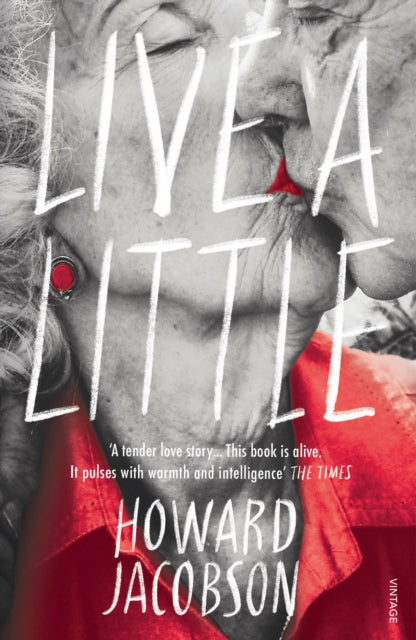
Vintage Publishing Live a Little
Book Synopsis'A . . . tender love story . . . This book is alive. It pulses with warmth and intelligence' The TimesA wickedly observed novel about falling in love at the end of your life, by the Man Booker Prize-winning author of The Finkler Question.At the age of ninety-something, Beryl Dusinbery is forgetting everything – including her own children. She spends her days stitching morbid samplers and tormenting her two carers with tangled tales of her husbands and affairs. Shimi Carmelli can do up his own buttons, walks without a frame and speaks without spitting. Among the widows of North London, he’s whispered about as the last of the eligible bachelors. He forgets nothing –especially not the shame of a childhood incident that has long hung over him. There's very little left remaining for either of them. . . But perhaps just enough to heal some of the hurt inflicted along the way, and find new meaning in what's left.*SHORTLISTED FOR THE WINGATE LITERARY PRIZE 2020*Trade ReviewA joyous new novel… A life-affirming tale of late-flowering love… if we manage to live a little longer, we might have the privilege of enjoying more novels such as this one. * Sunday Times *Let’s pause to consider [Howard Jacobson’s] comic elegance and precision… Just look at the way he makes the English language dance for us… the characters, as they converse, striking sparks off one another. * Spectator *Brilliantly observed… No other novelist writing in Britain could dramatise this nonagenarian love story with greater verve and tenderness, while never forgetting that this is a resplendently comedic form. * Observer *[Howard Jacobson] is not one to let the catastrophe of old age get in the way of a good laugh, or a surprisingly tender love story… [Live a Little is] merrily bonkers… This book is alive. It pulses with warmth and intelligence, and, unusually for a novel about old age, it has a lot of style. * The Times *A master of the slightly dark comedy… Jacobson brings this little pocket of North London to life superbly, and his two ageing protagonists are wonderful creations, depicted with wit and compassion. * Tatler *
£9.49

Beyond Words Publishing Conscious Living, Conscious Aging: Embrace &
Book SynopsisIn this newly revised and updated edition of Conscious Living, Conscious Aging, you will find an empowering guide with practical tools to help live a passionate, fulfilling, growth-oriented life.The baby boomer generation is reaching retirement age with unprecedented good health and resources, and is no longer satisfied with their parents’ approach to aging. Many older adults are seeking an empowering vision for their future but find that hard to come by in a world that glorifies youth and has largely forgotten the gifts that can accompany the life stage of elderhood. With this expanded and updated 10th anniversary edition of Conscious Living, Conscious Aging, you will find a contemporary manual filled with practices and tools to help you navigate your elder years with purpose and clarity. Ron Pevny’s provocative model of “conscious eldering” opens the door to the rich possibilities of intentionally growing into elderhood, as contrasted with merely growing old. Through advice, practices, and personal stories, this book will help you distill wisdom from your many years of life experience, navigate loss and grief, identify new passions and goals, and remain engaged and relevant as you enter life’s later chapters, creating a lasting legacy and a healthier world for the generations to follow. It’s time to engage with family, community, your spiritual source, and the world, which needs your talents. Don’t just grow old. Aim high and claim the gifts of elderhood.
£8.99

Diversion Books The Big 100: The Coming Age of Super-Aging
Book Synopsis“Stimulating and inspiring. . . .” —Dr. Jane Goodall, founder of the Jane Goodall Institute & UN Messenger of PeaceJournalist William J. Kole, reluctant but newly minted member of AARP, explores the looming era of super-aging—incredibly longer lifespans overall, and eight times more centenarians by the year 2050—through the lens of past, present, and future life at ages 50, 65, 80, and on to 100-plus. What happens to all of us when 65 is merely a life half-lived?By 2050, the world’s centenarian population—those aged 100 or more—will increase eightfold. Half of today’s 5-year-olds can expect to reach the same heights. It’s going to upend everything we thought we knew about health care, personal finance, retirement, politics, and more. Whether we’re 18 or 81, this tectonic demographic shift will affect us all. The Big 100 confronts readers with both the brightness and potential bleakness of a fate few of us thought possible. Journalist William Kole guides us on this journey into our future, an optimistic but sometimes fraught exploration of super-aging as the grandson of a centenarian. Along the way, there are expert sources, like Dr. Jane Goodall, longevity expert Dr. Thomas Perls, Senator Elizabeth Warren, and even 101-year-old influencer and fashionista Iris Apfel; along with surprises, including the truth about those so-called “Blue Zones” everyone thinks are centenarian factories. (Spoiler alert: They’re not.) And there’s the troubling truth that those reaching extreme longevity tend to be overwhelmingly white, a product of what experts deem the “weathering theory”: the idea that the health of African Americans begins to deteriorate in early adulthood as a physical consequence of socio-economic disadvantages. How long can we live? How long should we live? And what happens when 65 is merely a life half-lived?The Big 100 explores the most pressing questions of our super-aging future, and offers a glimpse of a reality that awaits us, our children, and our grandchildren.Trade Review"In his debut book, award-winning journalist Kole, a former foreign correspondent, points to this historical era, in which more and more people are reaching the age of 100 and beyond. Kole is known for telling the world about the longest-living person, France's Jeanne Calment, who died in 1997 after living 122 years and 164 days. In this book, he expertly examines the concept of what he calls "super-aging" and how it impacts people, including children and grandchildren, as his statistics show that the United States' population of people older than 65 will soon outnumber people who are 17 and younger. Kole doesn't just focus on age; he delves into such topics as loneliness too. For example, his research reveals that most older people think loneliness is just a part of aging or something they are forced into by social and workplace discrimination. But the book acknowledges that loneliness can lead to isolation and feelings of uselessness, which can cause one's mental and physical health to deteriorate. The conditions of Alzheimer's disease and dementia can also be contributing factors. Kole also doesn't shy away from discussing why it's white people who appear to be living the longest. VERDICT: A brilliant study on aging that's destined to become a classic."—Library Journal (Starred Review)"The vast baby-boomer cohort is moving into its sunset years. In 2034, the U.S. will have more people over 65 than under 17...[and] half of today's American 5-year-olds can expect to reach age 100. So The Big 100 comes not a moment too soon. William J. Kole...explores various aspects of the graying of America....address[ing] 'what we must do now to ensure our longer lives will truly be worth living.'"—Wall Street Journal“More and more people are living for 100 years—or longer. William J. Kole uses his knowledge and personal experiences to suggest how we can use these bonus years to best advantage, for ourselves and others. With beautiful prose and a sense of fun, The Big 100 is stimulating and inspiring. You should definitely read it."—Dr. Jane Goodall, founder of the Jane Goodall Institute & UN Messenger of Peace"The Big 100 is an entertaining challenge to all of us to rethink the second half of our lives. Provocative and fun."—Dr. John Beard, director, International Longevity Center“William J. Kole is more than a brilliant journalist and dazzling storyteller. He is a time traveler. Kole is our guide to a coming world of super-longevity and what it means for health systems, policy makers and the very fabric of families and communities. The Big 100 is our future. There is no more compelling story.” —Brian Murphy, author of 81 Days Below Zero: The Incredible Survival Story of a World War II Pilot in Alaska's Frozen Wilderness“With rapidly aging populations across the world and longer lives ahead, William J. Kole’s The Big 100 could not have come at a more important time. It’s a compelling call to action for everyone interested in the challenges and opportunities of our great demographic shift and the potential for longer, healthier, and more fulfilling lives.” —Paul Irving, founding chair of the Milken Institute's Center for the Future of Aging and distinguished scholar-in-residence at the University of Southern California's Leonard Davis School of Gerontology “Optimizing human longevity was arguably the greatest achievement of the last century, thanks in great part to the successes of public health. Enabling healthy longevity and the assets that older people contribute to the world will be our all-of-society challenge for the current generation. William J. Kole’s book gives us a basis for envisioning the society we want to design for all of our longer lives as we each approach the big 100.” —Dr. Linda P. Fried, dean of Columbia University’s Mailman School of Public Health and director of the Robert N. Butler Columbia Aging Center “Do I want to live to 100? I don’t know. But I do know that in The Big 100, journalist William J. Kole makes me think about it with a newfound appreciation for the science of aging. I had never truly considered the enormous societal cost of people living longer until The Big 100. Centenarians are the fastest-growing segment of our population, and Kole forces us to ask if we are ready for that tectonic demographic shift. Kole provides valuable perspective around the science of aging, the impact on society as people reach that milestone, and some heartwarming personal touches.” —Doug Most, bestselling author of The Race Underground: Boston, New York, and the Incredible Rivalry that Built America’s First Subway “None of us knows whether we’ll make it to ‘The Big 100,’ but regardless of age, all of us should make sure we have a copy of William J. Kole’s book on our shelf! In a readable style and an easy voice, Kole uses hard data and personal stories to explore everything important about the aging journey—finances, health, work, diet, dignity, laughter, and love. The Big 100 tells the most human story in the most human terms.” —Stephen Puleo, author of Dark Tide, The Caning, and Voyage of Mercy “The Big 100 points the way to a great long life without minimizing pain or the emotional weight of mortality. Using the latest scientific evidence for optimism and telling inspiring, sometimes amusing, stories of people as old as a hundred and more, William J. Kole shows how you can find joy in life right up to your last days on earth.” —Francine Russo, bestselling author of Love After Fifty: How to Find It, Enjoy It, and Keep It “Many people say they want to live to be a hundred, but beyond pension plans and good insurance, there's not really much of a road map for getting the most from that incredible milestone. William J. Kole's cogent exploration of ‘super-agers’ is a blueprint for living your best life long after most people are preparing to check out. I'm truly energized about my golden years in ways I wouldn't have thought possible.” —Rachel Jones, National Press Foundation“Deeply researched and reported, written in brisk, sharp prose, William J. Kole's probing exploration of the implications of longevity and an ever-expanding lifespan is a compelling and vital read. It's a timely and fascinating analysis of the cultural, economic, racial, medical, philosophical, societal and political upsides and downsides of the coming global surge in the number of centenarians. It's also great storytelling and a provocative look ahead at what the future of aging means for us all.” —Neal Thompson, author of The First Kennedys: The Humble Roots of an American Dynasty and A Curious Man: The Strange & Brilliant Life of Robert 'Believe It or Not' Ripley
£20.24

Icon Books The Gran Tour: Travels with my Elders
Book Synopsis'Both moving and hilarious' Spectator, Books of the Year'A tale of gloriously eccentric British pensioners. Aitken rivals Alan Bennett in the ear he has for an eavesdropped remark ... boy, can he write.' Daily Mail, Book of the WeekFROM THE AUTHOR OF THE ACCLAIMED A CHIP SHOP IN POZNAN.One millennial, six coach trips, one big generation gap.When Ben Aitken learnt that his gran had enjoyed a four-night holiday including four three-course dinners, four cooked breakfasts, four games of bingo, a pair of excursions, sixteen pints of lager and luxury return coach travel, all for a hundred pounds, he thought, that's the life, and signed himself up. Six times over.Good value aside, what Ben was really after was the company of his elders - those with more chapters under their belt, with the wisdom granted by experience, the candour gifted by time, and the hard-earned ability to live each day like it's nearly their last.A series of coach holidays ensued - from Scarborough to St Ives, Killarney to Lake Como - during which Ben attempts to shake off his thirty-something blues by getting old as soon as possible.Trade ReviewAs funny and moving account of inter-generational friendship as you could wish to read. -- Mark Mason, Daily MailBoth moving and hilarious -- Spectator * Books of the Year *A tale of gloriously eccentric British pensioners [and] a light-hearted travelogue ... [but] so much more than that as well. The pen portraits of his fellow holidaymakers are wonderful. And boy, can he write. -- Daily Mail * Book of the Week *Funny and moving ... the type of gentle travel writing that will leave you aching to visit a local seaside resort. -- StylistOne of the ... most enjoyable travel books I've ever read ... Aitken has an astonishingly sharp eye and ear for the wisdom and weirdness of his elderly companions. * Daily Express *
£13.49

Icon Books The Marmalade Diaries: The True Story of an Odd
Book Synopsis'Charming, touching and very very funny' Jenny Colgan'Simply too good' Daily MailFrom the author of the Times bestselling A Chip Shop in PoznanONE HOUSE. TWO HOUSEMATES. THREE REASONS TO WORRY: WINNIE AND BEN ARE SEPARATED BY 50 YEARS, A GULF IN CLASS, AND MAJOR DIFFERENCES OF OPINION.When hunting for a room in London, Ben Aitken came across one for a great price in a lovely part of town. There had to be a catch. And there was. The catch was Winnie: an 85-year-old widow who doesn't suffer fools.Full of warmth, wit and candour, The Marmalade Diaries tells the story of an unlikely friendship during an unlikely time. Imagine an intergenerational version of Big Brother, but with only two contestants. One of the pair a grieving and inflexible former aristocrat in her mid-eighties. The other a working-class millennial snowflake. What could possibly go wrong? What could possibly go right?Out of the most inauspicious of soils - and from the author of The Gran Tour - comes a book about grief, family, friendship, loneliness, life, love, lockdown and marmalade.Trade ReviewCharming, touching and very very funny * Jenny Colgan *Displays a keen eye for the humour of everyday life ... underneath it all is the wonderful story of two people born half a century apart, learning lessons from each other. * Daily Mail *Warm, funny and perceptive -- Jane Shilling * Daily Mail *
£15.29

Rudolf Steiner Press Growing Old: The Spiritual Dimensions of Ageing
Book Synopsis`And that is one thing we need to relearn, that all of life brings its gifts - not only the first two or three decades.' - Rudolf Steiner When are we actually old? What happens as we age? How will we cope with old age? Growing old is an art, and to grow old in the right way we need spiritual understanding. In this enlightening anthology - compiled by a director of care homes for the elderly - wide-ranging cosmological perspectives alternate with detailed observations of the phenomena of ageing. Rudolf Steiner sees ageing within the context of the earthly and spiritual evolution that encompasses all forms of existence. The book thus begins with the primary meaning that ageing has in developmental terms and ends with a consideration of the human being as co-creator in cosmic processes - and with our capacity to become increasingly conscious of the tasks this implies. These key texts by Rudolf Steiner show how spiritual knowledge can broaden the current debate on the study of old age, the process of ageing, and the particular problems faced by older people. Concerns about our `ageing population' can be seen in a broader context that recognizes the fruits of old age. The productive relationship between childhood and old age - a running theme throughout this volume - is one example. If we grow old consciously, viewing ageing not only as a period of physical decline but as a time when we can actively participate in shaping life, then we can begin to find greater meaning in it. Chapters include: `The Core Messages of Ageing'; `Fundamental Principles of Gerontology'; `Ageing as a Developmental Process'; `Ageing: the Risks and Opportunities'; The Art of Growing Old'; `Old Age and Death'; `Growing Old - A Challenge for Education'; `The Cosmological Dimensions of Ageing'.
£14.24

Splendid Publications Limited The Old Fart's Guide to Survival
Book SynopsisFor people of a 'certain age' this is a quirky, humorous and light-hearted handbook, covering everything from coping with modern technology to incontinence. Strictly for those oldies with a sense of humour, The Old Fart's Guide to Survival is full of candid observations and anecdotes which will have readers chuckling.
£6.23

HarperCollins Publishers 49 Uses for a Walking Stick
Book SynopsisWalking sticks have had a bad press. For too long the walking stick has been portrayed as a workaday item of codgerism, a simple support for the aged and infirm. This is not the case. Possession of a walking stick opens up a whole gamut of opportunities beyond the simple 'leaning against' purpose. In 49 Uses for A Walking Stick Frank Hopkinson explains the variety of practical uses a walking stick can be put to, from flicking filthy slugs off a lawn and parting crowds to alerting a theatre-goer two rows in front that his rapid consumption of fruit bonbons is ruining everyone's enjoyment. Illustrated throughout, the book also includes a miscellany of walking stick trivia, facts and figures and fun information.
£999.99

Bristol University Press Dementia and Human Rights
Book SynopsisLaunching the dementia debate into new and exciting territory, this book applies a human rights lens to interrogate the lived experience and policy response to dementia.Trade Review"This book is a down to earth, accessible translation of complex legal, sociological and ethical subjects and as such will appeal to undergraduate and postgraduate students of dementia, practitioners and policy makers alike." Professor Kate Irving, Dublin City UniversityTable of ContentsAn introduction to human rights and dementia Dementia as a disability Setting the context: The UN Convention on the Rights of Persons with Disabilities The right to a good quality of life at home and in the community The right to a good quality of life in care homes or in nursing homes Emerging public policy on dementia: the implications of a human rights-based approach for policy and practice Legal capacity for people with dementia Conclusions: grounds for hope
£999.99

Oxford University Press Ageing
Book SynopsisAgeing is an activity we are familiar with from an early age. In our younger years upcoming birthdays are anticipated with an excitement that somewhat diminishes as the years progress. As we grow older we are bombarded with advice on ways to overcome, thwart, resist, and, on the rare occasion, embrace, one''s ageing. Have all human beings from the various historical epochs and cultures viewed aging with this same ambivalence? In this Very Short Introduction Nancy A. Pachana discusses the lifelong dynamic changes in biological, psychological, and social functioning involved in ageing. Increased lifespans in the developed and the developing world have created an urgent need to find ways to enhance our functioning and well-being in the later decades of life, and this need is reflected in policies and action plans addressing our ageing populations from the World Health Organization and the United Nations. Looking to the future, Pachana considers advancements in the provision for our ageing populations, including revolutionary models of nursing home care such as Green House nursing homes in the USA and Small Group Living homes in the Netherlands. She shows that understanding the process of ageing is not only important for individuals, but also for societies and nations, if the full potential of those entering later life is to be realised.ABOUT THE SERIES: The Very Short Introductions series from Oxford University Press contains hundreds of titles in almost every subject area. These pocket-sized books are the perfect way to get ahead in a new subject quickly. Our expert authors combine facts, analysis, perspective, new ideas, and enthusiasm to make interesting and challenging topics highly readable.Table of ContentsREFERENCES; FURTHER READING; INDEX
£9.49
Elsevier Science PersonCentered Communication with Older Adults
Book SynopsisTable of ContentsChapter 1 - Providers, Older Adults, and Communication Chapter 2 - How to Learn and Implement the Person-Centered Approach to Communication Chapter 3 - The Professional Relationship: The Foundation of Person-Centered Communication Chapter 4 - Nuts and Bolts of Interpersonal Communication: The Clinical Face of Service Chapter 5 - Person-Centered Communication: Ageism-The Core Problem communication Chapter 6 - Person-Centered Communication: Age-Related Changes, Cultural Challenges, and Difficult Conversations Chapter 7 - Person-Centered Communication and Stress: The Eighth "C" - Calmness Chapter 8 - Person-Centered Communication: Mental Imagery and Imagined Interactions Chapter 9 - Neurocardiology of Communication: The Ninth "C"—Coherence Chapter 10 - The Physics of Interpersonal Communication: The Tenth "C"—Connection Chapter 11 - Person-Centered Interpersonal Communications: The Future of Aging
£999.99

The University of Chicago Press The Economic Effects of Aging in the United States Japan NBERProject Reports
a huge range and FREE tracked UK delivery on ALL orders.
£98.80

University of Chicago Press Aging in the United States Japan Economic Trends
Book SynopsisWith essays on labour force participation and retirement, housing equity and the economic status of the elderly, and financing of social security and health care in the 1990s, this volume covers a broad spectrum of issues related to the economics of ageing in the United States and Japan.Table of ContentsPreface Introduction 1 Yukio Noguchi, David A. Wise. 1: Aging and Labor Force Participation: A Review of Trends and Explanations 7 Robin L. Lumsdaine, David A. Wise. 2: Social Security Benefits and the Labor Supply of the Elderly in Japan 43 Atsushi Seike, Haruo Shimada. 3: The Economic Status of the Elderly in the United States 63 Michael D. Hurd 4: Household Asset- and Wealthholdings in Japan 85 Noriyuki Takayama 5: Problems of Housing the Elderly in the United States and Japan 109 Daniel L. McFadden 6: The Cost of Aging: Public Finance Perspectives for Japan 139 Seiritsu Ogura 7: Financing Health Care for Elderly Americans in the 1990s 175 Alan M. Garber Contributors 195 Author Index 197 Subject Index 201
£58.90

The University of Chicago Press Themes in the Economics of Aging NBER National
Book SynopsisIn the past few years, the economic ramifications of ageing have garnered close attention from a group of NBER researchers led by the author. In this volume, Wise and his collaborators continue to analyze a nexus of age-related issues.
£90.25

The University of Chicago Press Analyses in the Economics of Aging NBER National
Book SynopsisCarefully compiled and containing some of the most cutting-edge research and analysis available, this volume should be of interest to any specialist or policymaker concerned with ongoing changes in savings and retirement behaviors.
£999.99

The University of Chicago Press Studies in the Economics of Aging NBERProject
Book SynopsisThis volume examines relations between elderly population growth and government spending. Chapters cover: life expectancy and health; saving for retirement and the role of 401(k) plans; demographic transition and housing values; and ageing in Germany and Taiwan.Table of ContentsAcknowledgments Introduction 1 David A. Wise 1: The Impact of the Demographic Transition on Government Spending 13 John B. Shoven, Michael D. Topper, David A. Wise. 2: Methods for Projecting the Future Size and Health Status of the U.S. Elderly Population 41 Kenneth G. Manton, Eric Stallard, Burton H. Singer. 3: Longer Life Expectancy? Evidence from Sweden of Reductions in Mortality Rates at Advanced Ages 79 James W. Vaupel, Hans Lundstrom. 4: 401(k) Plans and Tax-Deferred Saving 105 James M. Poterba, Steven F. Venti, David A. Wise. 5: Some Thoughts on Savings 143 Edward P. Lazear 6: Pension Plan Provisions and Retirement: Men and Women, Medicare, and Models 183 Robin L. Lumsdaine, James H. Stock, David A. Wise. 7: Demographics, the Housing Market, and the Welfare of the Elderly 225 Daniel McFadden 8: Aging in Germany and the United States: International Comparisons 291 Axel Borsch-Supan 9: Saving, Growth, and Aging in Taiwan 331 Angus S. Deaton, Christina H. Paxson. 10: Forecasting Nursing Home Utilization of Elderly Americans 365 Andrew Dick, Alan M. Garber, Thomas A. MaCurdy. 11: Policy Options for Long-Term Care 395 David M. Cutler, Louise M. Sheiner. Contributors 443 Author Index 447 Subject Index 451
£92.15

The University of Chicago Press Topics in the Economics of Aging NBERProject
Book SynopsisThe original essays and commentary in this volumethe third in a series reporting the results of the NBER Economics of Aging Programaddress issues that are of particular importance to the well-being of individuals as they age and to a society at large that is composed increasingly of older persons. The contributors examine social security reform, including an analysis of the Japanese system; present the startling finding that the vast majority of people choose the wrong accumulation strategies for their pension plans; explore the continuing consequences of the decline in support of parents by children in the postwar period; investigate the relation between nursing home stays and the source of payment for the care; and offer initial findings on the implications of differences between developed and developing countries for understanding aging issues and determining appropriate directions for research.
£87.40


