
Search results for """ "The Lost Dauphin""
Independently Published The Lost Dauphin
£9.00
Independently Published The Lost Dauphin
£9.00
Alpha Editions The Mystery of the Lost Dauphin Louis XVII Edition1
£18.99
Independently Published The Lost Dauphin
£8.48
Independently Published The Lost Dauphin
£9.35
Creative Media Partners, LLC The Mystery of the Lost Dauphin
£15.95
Creative Media Partners, LLC The Mystery of the Lost Dauphin
£24.65
HardPress Publishing La Libertà Anglaise Mise à Nu Par JeanJacques Dauphin Racontant à Son Ami Guillaume Tell Ses Aventures Chez Son Voisin Et FidÃle Allià John Bull
a huge range and FREE tracked UK delivery on ALL orders.
£17.37

Fantagraphics Books Lost Marvels No. 2 Howard Chaykin Vol. 1
Book Synopsis
£35.99

Taschen GmbH Donald Duck. The Ultimate History
Book SynopsisNothing succeeds like success, as the saying goes, but in the case of Donald Duck the opposite is true: the candor with which Donald reveals his weaknesses wins our hearts and stays with us forever.Revisit Donald's life's work from nine decades in one of the most expansive illustrated publications on the Disney universe. Following TASCHEN's Mickey Mouse: The Ultimate History, we witness the career of Mickey's only rival for the throne as Disney's most popular creation. From his debut in the Silly Symphony short film The Wise Little Hen on June 9, 1934, the authors trace Donald's more than 170 cartoons, groundbreaking adventures in comics and TV, and theme park appearances. As a special treat to his fans, they also dive deep into the vaults to tell the story of his unfinished film projects.With unprecedented access to Disney's vast historical archives and collections as well as public and private collections, the authors illuminate Donald's life story with rar
£148.75
The Mercier Press Ltd Missing in Action: The 50 Year Search for Ireland's Lost Soldier
Book SynopsisThe interior of the old Ford armoured car stank of sweat, blood and acrid smoke. Pat's eyes desperately struggled to focus in the gloom of the biting cordite fog …On 15 September 1961, Trooper Patrick Mullins was posted missing after the bloody ambush of an Irish UN convoy in a suburb of Elisabethville in the Katanga province of the Congo. The circumstances of that fateful day have remained shrouded in confusion and contradiction for five decades – until now. Missing in Action reveals for the first time how an ill-equipped and heavily out-gunned Irish soldier fought with astonishing courage against heavily armed and ruthless Katangan gendarmes. Through interviews with the survivors and access to military intelligence sources, the truth about Trooper Mullins' heroic last stand and ultimate fate can now be told.Trade ReviewPicked this book up in a bookshop in Portrush. Very informative about Irish troops in the Congo in the 60s. Plus a very interesting story and search for Patrick Mullins. -- Glen Gilpin * Goodreads *
£17.58

The University of Chicago Press Losing the Plot
Book SynopsisAn examination of the relationship between literature and classical Hollywood cinema reveals a profound longing for plot in modernist fiction. The modernist novel sought to escape what Virginia Woolf called the tyranny of plot. Yet even as twentieth-century writers pushed against the constraints of plot-driven Victorian novels, plot kept its hold on them through the influence of another medium: the cinema. Focusing on the novels of Nella Larsen, Djuna Barnes, and William Faulknerwriters known for their affinities and connections to classical HollywoodPardis Dabashi links the moviegoing practices of these writers to the tensions between the formal properties of their novels and the characters in them. Even when they did not feature outright happy endings, classical Hollywood films often provided satisfying formal resolutions and promoted normative social and political values. Watching these films, modernist authors were reminded of what they were leaving behindboth formally and in thTrade Review“Reevaluating one of the most familiar critical truisms about the period, Losing the Plot is an erudite, elegant, and insightful exploration of modernism’s ambivalent relationship to plot. Reading Larsen alongside Garbo, or Barnes alongside Dietrich, Dabashi shows us how the encounter with commercial narrative cinema allowed modernist writers to negotiate the double feelings of repudiation and longing for stability and coherence associated with the closure and teleology of plot.” * Dora Zhang, University of California, Berkeley *“Losing the Plot is an extremely ambitious book, one that aims to fundamentally rewrite and revise our understanding of modernist aesthetics in film and literature. By recasting plot as a modernist fantasy, and then by showing how cinema served as a model of that fantasy, Dabashi is able to provide an entirely original way of thinking about the relation between cinema and modernism, and indeed about modernism itself.” * Daniel Morgan, University of Chicago *Table of ContentsIntroduction: The Arts of Inconsequence 1: Nella Larsen and Greta Garbo: On (In)Consequence Première Entr’acte 2: Djuna Barnes and Marlene Dietrich: On the Security of Torment Deuxième Entr’acte 3: William Faulkner and Early Film: On the Limits of the Present Coda: Max Ophuls: On Love and Finitude Acknowledgments Notes Index
£76.00

Random House USA Inc Lost
Book SynopsisIn this paneled picture book, join a small girl on her hilarious and surprising search for her lost cat--and watch as she helps her neighbors, who have also lost their pets, along the way!Where, oh where is Kitty? She''s not upstairs... not in her litter box... not at her food bowl. Hmm...There''s only one thing to do: find this lost cat.As the cat''s owner roams town in hopes of finding her pet, she discovers she''s not the only one missing their beloved animal. There''s also a lost dog...a lost bird...even a lost giraffe!Join the search party in this almost wordless story that celebrates helping our neighbors and gently reminds us that what is lost can always be found.
£14.39

The University of Chicago Press Losing the Plot
Book SynopsisAn examination of the relationship between literature and classical Hollywood cinema reveals a profound longing for plot in modernist fiction. The modernist novel sought to escape what Virginia Woolf called the tyranny of plot. Yet even as twentieth-century writers pushed against the constraints of plot-driven Victorian novels, plot kept its hold on them through the influence of another medium: the cinema. Focusing on the novels of Nella Larsen, Djuna Barnes, and William Faulknerwriters known for their affinities and connections to classical HollywoodPardis Dabashi links the moviegoing practices of these writers to the tensions between the formal properties of their novels and the characters in them. Even when they did not feature outright happy endings, classical Hollywood films often provided satisfying formal resolutions and promoted normative social and political values. Watching these films, modernist authors were reminded of what they were leaving behindboth formally and in thTrade Review“Reevaluating one of the most familiar critical truisms about the period, Losing the Plot is an erudite, elegant, and insightful exploration of modernism’s ambivalent relationship to plot. Reading Larsen alongside Garbo, or Barnes alongside Dietrich, Dabashi shows us how the encounter with commercial narrative cinema allowed modernist writers to negotiate the double feelings of repudiation and longing for stability and coherence associated with the closure and teleology of plot.” * Dora Zhang, University of California, Berkeley *“Losing the Plot is an extremely ambitious book, one that aims to fundamentally rewrite and revise our understanding of modernist aesthetics in film and literature. By recasting plot as a modernist fantasy, and then by showing how cinema served as a model of that fantasy, Dabashi is able to provide an entirely original way of thinking about the relation between cinema and modernism, and indeed about modernism itself.” * Daniel Morgan, University of Chicago *Table of ContentsIntroduction: The Arts of Inconsequence 1: Nella Larsen and Greta Garbo: On (In)Consequence Première Entr’acte 2: Djuna Barnes and Marlene Dietrich: On the Security of Torment Deuxième Entr’acte 3: William Faulkner and Early Film: On the Limits of the Present Coda: Max Ophuls: On Love and Finitude Acknowledgments Notes Index
£22.80

HarperCollins Publishers The Lost Puppy Book 4 Dotty Detective
Book SynopsisDot, her best friend Beans and her dog McClusky all love sniffing out a good mystery and together they will solve the case and save the day . . .It's the last week of school term and the children are looking forward to the School summer fair. Dotty and best pal Beans will be looking after pet's corner, starring McClusky and his two canine pals: Geoffrey and the little sausage dog puppy, Chipolata. But just days before the fair disaster strikes Chipolata has gone missing.Dotty and Beans get on the case. Can they solve the mystery of the missing puppy?Trade ReviewPraise for Dotty Detective – The Lost Puppy “These would be great for children who are starting to gain more independence in their reading as the text is really clear and simple” ReadingZone “I’ve enjoyed Dotty’s latest mystery, The Lost Puppy, just as much as her earlier adventures” ReadingZone Praise for previous Dotty titles: ‘It's funny, it's mysterious and you will be puzzled for a long time.’ – Aarav Mehta, age 7 ‘This book was amazing and I really enjoyed it.’ – Cassandra Butler, age 6 ‘I liked how Dot solved the mystery.’ – Ruby Laverty, age 6
£6.99

Transworld Publishers Ltd The Lost Army Of Cambyses
Book SynopsisThis gripping, captivating and wonderfully evocative archeological thriller by bestselling author Paul Sussman is a must read for fans of Clive Cussler and Wilbur Smith.A tremendous adventure, one of the most intriguing mysteries of the past, a great novel masterfully written - VALERIO MASSIMO MANFREDIOne of the best writers of international suspense in the business - STEVE BERRYStylish writing and deep research - GUARDIANAn excellent book full of twists and turns. -- ***** Reader reviewEnthralling -- ***** Reader reviewWOW what a brilliant book and enjoyed every bit of it. No hesitation in giving it 5 stars. -- ***** Reader review***********************************************************************************MURDER, INTRIGUE, VIOLENCE, BETRAYAL AND A RACE TO SOLVE ONE OF THE GREATEST MYSTERIES OF THE ANCIENT WORLD...523 BC: the Persian pharaoh CambysesTrade Review'At last, at thriller that gets away from the hackneyed old "curse of Tut" stuff...the fast paced plot is one among many good things in this very assured first novel' * Scotland on Sunday *A tremendous adventure, one of the most intriguing mysteries of the past, a great novel masterfully written -- VALERIO MASSIMO MANFREDI
£9.99

The Dovecote Press Lost Dorset: The Towns
Book Synopsis
£19.00
Atria Books The Lost Empire of Emanuel Nobel
£24.00

Oro Editions Lost Danish Treasure
Book SynopsisGrowing up, almost every kid dreams of finding buried treasure. That dream slowly fades with age as they realise that Blackbeard never visited their backyard. For some, the search for treasure continues in their adult lives in other ways. Metal detectors and shovels may be replaced with online searches and library visits, but the thrill of the hunt is still alive, ever driving the quest forward.Lost Danish Treasure tells the tale of two stories: 1) the history of Finn Juhl's iconic Chieftain Chair and a long-forgotten painting that preceded it, and 2) the individual connections to this design by a small group of collector researchers.Although starting in different eras and timelines, the two accounts start to intertwine over the course of the book, with the research efforts of today helping to unravel the mysteries of the past. As each chapter unfolds, more and more clues are revealed that slowly weave the storylines closer together until the summer
£49.50

Hyperion Beyond the Isle of the Lost
Book SynopsisA new entry in the New York Times bestselling Descendants series by Melissa de la Cruz—and a prequel to the forthcoming Disney Channel Original Movie.Filled with humor and adventure, this novel tied to Disney Channel''s newest addition to the Descendants film franchise explores a madcap prequel set in Wonderland.
£13.49

The University of Chicago Press The Lost Species
Book SynopsisTrade Review"An unexpectedly delightful and rewarding jaunt into once-cherished, now-decaying living history. Each chapter gives a quick sketch of a species or genus that was formally described from a museum specimen, often decades after it was collected. Most of the creatures--which include lightning cockroaches, squeaker frogs, pygmy bandicoots from New Guinea, ruby seadragons, and 'atomic' tarantulas caught at a nuclear test site in Nevada--have been identified in the past fifteen years or so."-- "Wall Street Journal" "As part of the rising concern for global biodiversity, Christopher Kemp makes clear the value of preserved specimens in basic research. He successfully presents their study as part science, part history, and part adventure."--Edward O. Wilson, University Research Professor, emeritus, Harvard University "Forbes, Best Biology Books of 2017" "The natural history museums of the world are full of surprises--undescribed species, from flying foxes to king crabs--sitting on their shelves waiting for someone to notice. Kemp vividly brings to life the stories of these specimens, and the people who collect and describe them. The Lost Species will delight any reader who cares about discovery, adventure, and the little-known planet that sustains us."--Richard Conniff, author of The Species Seekers: Heroes, Fools, and the Mad Pursuit of Life on Earth "Forbes, Best Biology Books of 2017" "Natural history museums and their collections come alive with Kemp's inside stories of new species formerly hidden away in museum drawers and jars. Anyone who appreciates discovery and has an interest in museums, history, and biodiversity will find plenty to enjoy in The Lost Species, an intriguing, engaging, and conversational read."--Marty Crump, author of Eye of Newt and Toe of Frog, Adder's Fork and Lizard's Leg: The Lore and Mythology of Amphibians and Reptiles "Forbes, Best Biology Books of 2017" "Natural history collections are vast, backlogged, error-riddled, or incompletely described. Think of all those expeditions in the 1800s and 1900s. Imagine drawers with thousands of beetles and flies, countless jars of marine invertebrates. What other treasures could those collections still be holding? Well, biologist Kemp wondered about that, too. And he went on a quest to uncover the forgotten collections and chronicled his findings in a book, The Last Species--new species that were only found with the help of natural history museums. . . . Amazing story."--Ira Flatow "Science Friday" "At a time when funding for natural history collections is under siege, Kemp's The Lost Species, which champions the irreplaceable value of these collections in the identification of new species, is a refreshing endorsement of both biodiversity and curatorial taxonomic expertise. . . . Kemp ably demonstrates the vital role that natural history collections and curators with taxonomic expertise play in the documentation of new species and ultimately in the preservation of biodiversity. These collections require maintenance to ensure the preservation of specimens and documentation for the next generation of taxonomists, who will discover more new species. It is my hope that The Lost Species will engender broader public interest and support for these efforts."--Bonnie Styles "Science" "As Kemp showcases these inspiring discoveries, you'll find yourself wondering what undiscovered treasures can be found in your local natural history museum. Clearly there is plenty of unknown biodiversity: currently, only 2 million species have been named out of the estimated 10 million that are thought to be out there (some credible estimates go as high as 30 million unnamed species), but I was amazed to learn that as many as half of all museum specimens are misidentified. Yeow! Clearly, there's a lot of taxonomic and systematic work to be done. This engaging book is a compelling argument for the overall value of natural history museums, and for the importance of studying these collections."--GrrlScientist "Forbes, Best Biology Books of 2017" "Major natural history museums of the world today collectively hold an enormous, irreplaceable collection of scientific objects numbering in the billions. Among this library of life and culture that has been assembled over several centuries, each piece has its own tale to tell. Christopher Kemp vividly brings several of these stories to life in The Lost Species. He chooses pieces ranging from a lowly nematode worm to the mighty dinosaur Apatosaurus (formerly known as Brontosaurus) to engage us. He presents these specimens to us not only as voucher specimens of Earth's biodiversity, but also as examples of human endeavor surrounding their discovery and eventual study. A great read for anyone interested in natural history museum collections, how they came to be, and what we can learn from them." --Lance Grande, author of Curators "Forbes, Best Biology Books of 2017"
£26.00

The University of Chicago Press The Lost World of Thomas Jefferson
Book SynopsisBy analysing writings of 'the Jeffersonian Circle,' Boorstin explores concepts of God, nature, equality, toleration, education and government in order to illuminate their underlying world view.
£24.00
The History Press Ltd Lost Gods of Albion
Book SynopsisA uniquely British phenomenon, the thirty or so figures cut into the turf of southern England have excited antiquarians, archaeologists and the general public for generations. However, their origins are enigmatic. Paul Newman shows how hill-figures reveal Britain''s darkest past: Druid massacres, conjectured human sacrifice and strange phallic and pagan rites that in milder form survive even today. In recent years much has changed in the world of hill-figure studies, most significantly perhaps the absolute dating by scientific means of early silts incorporated into the Uffington White Horse, which can now be seen to date from around 1000 BC. These and other discoveries and reinterpretations are among the many features which make this book essential reading for all those who have been captivated by the potent symbolism of chalk hill-figures.
£17.00

MIT Press Walking in Berlin A Flaneur in the Capital Mit Press
Book SynopsisThe first English translation of a lost classic that reinvents the flaneur in Berlin.Franz Hessel (1880-1941), a German-born writer, grew up in Berlin, studied in Munich, and then lived in Paris, where he moved in artistic and literary circles. His relationship with the fashion journalist Helen Grund was the inspiration for Henri-Pierre Roche's novel Jules et Jim (made into a celebrated 1962 film by Francois Truffaut). In collaboration with Walter Benjamin, Hessel reinvented the Parisian figure of the flaneur. This 1929 book—here in its first English translation—offers Hessel's version of a flaneur in Berlin.In Walking in Berlin, Hessel captures the rhythm of Weimar-era Berlin, recording the seismic shifts in German culture. Nearly all of the essays take the form of a walk or outing, focusing on either a theme or part of the city, and many end at a theater, cinema, or club. Hessel deftly weaves the past with the present, walking through the ci
£17.05

The University of Chicago Press The Lost Species
Book SynopsisTrade Review"An unexpectedly delightful and rewarding jaunt into once-cherished, now-decaying living history. Each chapter gives a quick sketch of a species or genus that was formally described from a museum specimen, often decades after it was collected. Most of the creatures--which include lightning cockroaches, squeaker frogs, pygmy bandicoots from New Guinea, ruby seadragons, and 'atomic' tarantulas caught at a nuclear test site in Nevada--have been identified in the past fifteen years or so."--Ira Flatow "Wall Street Journal" "As part of the rising concern for global biodiversity, Christopher Kemp makes clear the value of preserved specimens in basic research. He successfully presents their study as part science, part history, and part adventure."--Edward O. Wilson, University Research Professor, emeritus, Harvard University "Forbes, Best Biology Books of 2017" "The natural history museums of the world are full of surprises--undescribed species, from flying foxes to king crabs--sitting on their shelves waiting for someone to notice. Kemp vividly brings to life the stories of these specimens, and the people who collect and describe them. The Lost Species will delight any reader who cares about discovery, adventure, and the little-known planet that sustains us."--Richard Conniff, author of The Species Seekers: Heroes, Fools, and the Mad Pursuit of Life on Earth "Forbes, Best Biology Books of 2017" "Natural history museums and their collections come alive with Kemp's inside stories of new species formerly hidden away in museum drawers and jars. Anyone who appreciates discovery and has an interest in museums, history, and biodiversity will find plenty to enjoy in The Lost Species, an intriguing, engaging, and conversational read."--Marty Crump, author of Eye of Newt and Toe of Frog, Adder's Fork and Lizard's Leg: The Lore and Mythology of Amphibians and Reptiles "Forbes, Best Biology Books of 2017" "Natural history collections are vast, backlogged, error-riddled, or incompletely described. Think of all those expeditions in the 1800s and 1900s. Imagine drawers with thousands of beetles and flies, countless jars of marine invertebrates. What other treasures could those collections still be holding? Well, biologist Kemp wondered about that, too. And he went on a quest to uncover the forgotten collections and chronicled his findings in a book, The Last Species--new species that were only found with the help of natural history museums. . . . Amazing story."--Ira Flatow "Science Friday" "At a time when funding for natural history collections is under siege, Kemp's The Lost Species, which champions the irreplaceable value of these collections in the identification of new species, is a refreshing endorsement of both biodiversity and curatorial taxonomic expertise. . . . Kemp ably demonstrates the vital role that natural history collections and curators with taxonomic expertise play in the documentation of new species and ultimately in the preservation of biodiversity. These collections require maintenance to ensure the preservation of specimens and documentation for the next generation of taxonomists, who will discover more new species. It is my hope that The Lost Species will engender broader public interest and support for these efforts."--Bonnie Styles "Science" "As Kemp showcases these inspiring discoveries, you'll find yourself wondering what undiscovered treasures can be found in your local natural history museum. Clearly there is plenty of unknown biodiversity: currently, only 2 million species have been named out of the estimated 10 million that are thought to be out there (some credible estimates go as high as 30 million unnamed species), but I was amazed to learn that as many as half of all museum specimens are misidentified. Yeow! Clearly, there's a lot of taxonomic and systematic work to be done. This engaging book is a compelling argument for the overall value of natural history museums, and for the importance of studying these collections."--GrrlScientist "Forbes, Best Biology Books of 2017" "Major natural history museums of the world today collectively hold an enormous, irreplaceable collection of scientific objects numbering in the billions. Among this library of life and culture that has been assembled over several centuries, each piece has its own tale to tell. Christopher Kemp vividly brings several of these stories to life in The Lost Species. He chooses pieces ranging from a lowly nematode worm to the mighty dinosaur Apatosaurus (formerly known as Brontosaurus) to engage us. He presents these specimens to us not only as voucher specimens of Earth's biodiversity, but also as examples of human endeavor surrounding their discovery and eventual study. A great read for anyone interested in natural history museum collections, how they came to be, and what we can learn from them." --Lance Grande, author of Curators "Forbes, Best Biology Books of 2017"Table of ContentsIntroduction The Vertebrates 1. Pushed up a Mountain and into the Clouds: The Olinguito (Bassaricyon neblina) 2. Beneath a Color 83 Sky: The Ucucha Mouse (Thomasomys ucucha) 3. Going on a Tapir Hunt: The Little Black Tapir (Tapirus kabomani) 4. A Taxonomic Confusion: The Saki Monkeys (Pithecia genus) 5. Scattered to the Corners of the World: The Arfak Pygmy Bandicoot (Microperoryctes aplini) 6. The One That Got Away for 160 Years: Wallace’s Pike Cichlid (Crenicichla monicae) 7. Here Be Dragons: The Ruby Seadragon (Phyllopteryx dewysea) 8. A Century in a Jar: The Thorius Salamanders 9. From a Green Bowl: The Overlooked Squeaker Frog (Arthroleptis kutogundua) 10. A Body and a Disembodied Tail: Smith’s Hidden Gecko (Cyrtodactylus celatus) The Invertebrates 11. Treasure in the By-Catch: The Gall Wasps (Cynipoidea species) 12. The Biomimic: The Lightning Cockroach (Lucihormetica luckae) 13. Sunk beneath the Surface in a Sea of Beetles: Darwin’s Rove Beetle (Darwinilus sedarisi) 14. The Spoils of a Distant War: The Congo Duskhawker Dragonfly (Gynacantha congolica) 15. A Specimen in Two Halves: Muir’s Wedge-Shaped Beetle (Rhipidocyrtus muiri) 16. Mary Kingsley’s Longhorn Beetle (Pseudictator kingsleyae) 17. The Giant Flies (Gauromydas papavero and Gauromydas mateus) 18. It Came from Area 51: The Atomic Tarantula Spider (Aphonopelma atomicum) 19. The Host with the Most: The Nematode Worm (Ohbayashinema aspeira) 20. From a Time Machine on Cromwell Road: Ablett’s Land Snail (Pseudopomatias abletti) 21. In Sight of Land: Payden’s Isopod (Exosphaeroma paydenae) 22. A Ball of Spines: Makarov’s King Crab (Paralomis makarovi) Botanical 23. In an Ikea Bag: The Custard Apple Family (Monanthotaxis Genus) The Others 24. Waiting with Their Jackets On: The Fossils (Paleontology Specimens Collected by Elmer Riggs) 25. The First Art: The Earliest Hominin Engraving (a 500,000-Year-Old Shell) Epilogue Illustration Captions and Credits Notes Index
£17.00
AT Verlag Lost in the Alps
Book Synopsis
£36.80
David York: The Psychic Multiverse Vault of the Lost Glyph
£22.79
The Library of Alexandria The Lost Gospels of Jesus
£19.38

The Lilliput Press Ltd The Long Lost Log
Book SynopsisIn 1974, 22-year-old virgin sailor Mick escapes unemployment, family and 3-day-week London to become a deckhand on a small sailboat, Gay Gander, setting out to sail the Atlantic from England's West Country, via the Canaries, to Antigua in the Caribbean. Under the eye of an unfathomable skipper, John Francis Kearney, and his formidable sailing companion Carola (both escaping from a rain-sodden Ireland and broken marriages), Mick has to learn sailing, table manners, bridging the generation gap and getting along with Stryder, the Russian Blue ship's cat. The Long Lost Log should be fiction but is the true story of a voyage of discovery that Mick - against all odds - survived to tell this remarkable and hilarious tale. His inner and outer journey combines danger with the unexpected, the erotic and the comic, in a resonantly related rite of passage that leaps from the page like the curious whale that once disturbed the narrator's watch. The skipper involved happens to be the publisher's late father.Trade Review'The Long Lost Log is an entertaining account of crossing the Atlantic in 1974. Those who have ever been young, muddled and gullible will enjoy this book.' -Julia Jones; 'Yachting Monthly A vivid, spellbinding account of a true-life adventure, packed with insights into the human condition - this witty, well-paced rite of passage is full of freshness, sexual impulse and a clash of values. It is a rollicking tale written with verve, keen observations and sparkling with wry humour. Long Lost Log is a period piece for the nostalgic traveller and the armchair adventurer of any age.' - Kevin Cannon, Kevin's Book Reviews ; '... laced with some witty exchanges amongst the crew and some ribald adventures ashore by the writer ... in early September 1974, Mick finds himself literally up the creek without a paddle.' - Tom O'Sullivan, Irish Examiner ; 'Chapman Pincher has an ease with words, crafting his memories of sailing across the Atlantic into a thrilling page turner, peppered with humour, insight, beauty and the eager hope of a youth finding his way in the 70s. As well as the physical book, I was also able to listen to the audiobook recorded by the author ... Chapman Pincher has a way of telling a story with not only the written word, but a method of delivery which leaves you chuckling away out loud on the bus much to the mystery of your fellow traveller. Each character is deftly spun and each encounter and vignette in this adventure of a first-time sailor is expertly told.' - Rose Hall, Goodreads ; 'a book for those who have ever been young, muddled or wanting adventure ... Long Lost Log: Diary of a Virgin Sailor is witty, charming, and proof that some risks are worth taking ... A beautifully crafted book, multi-layered and bravely written, Long Lost Log has many interesting insights into the skills and craft of sailing and the broader history of the day.' - Shire Times ; 'A wonderful read, a thoughtful and heartfelt insight into a young man’s grasping of life and its infinite possibilities and confusions and the wonders of the sea and sailing.' - WM Nixon, Afloat Magazine ; 'It’s really quite something. A wonderful read.' - William M Nixon, Afloat ; Well written and genuinely funny; already a bestseller for us!' - Coach House Books ; 'It's an excellent read - fun - casual - and simply enticing.' Book-blip.com ; 'This is a rite of passage tale worth publishing.' - Yachting Monthly ; 'The vivacity is all in the quick phrasing of extraordinary things...' - Prof of Literature at Galway University ; 'One of the best books I've read this year.' - Jakereadsbooks -TikTok Influencer ; 'Chapman Pincher is a natural penman. I was gripped.' - Ed Maggs. ; 'A hilarious look back at the misspent youth I wished I'd had.' - Adrian Bracken, Film producer ; 'It's perfect gem of a book and I don't like boats.' Jeananne Crowley ; 'Written in a nice easy style..ideal for anyone who likes a good adventure story.' - Reedsy Discovery
£13.30

Vintage Publishing The Three Musketeers
Book SynopsisThe young D'Artagnan and the legendary musketeers Athos, Porthos and Aramis are ''the inseparables'' - ready to sacrifice everything in a duel or game of dice in order to defend their honour or that of the King and Queen of France. Handsome and hot-tempered, they dive into raging battles or back-street conspiracies with gusto, especially if by their daring deeds they can thwart the wicked devices of their arch-enemy, Cardinal Richelieu, and his mysterious accomplice, Milady de Winter.All for one, and one for all!Trade ReviewMassive, funny, moving, exhaustingly gripping: a melodrama, a revenge drama and, literally, bodice-ripping * Independent on Sunday *There was nobody quicker than Dumas. There were few better. Dumas stands proudly in the pantheon of 19th-century greats. He deserves to be regarded alongside Dickens and Tolstoy as an influential, enduring writer * Glasgow Herald *Dumas's novels are shameless word-guzzlers, big and plush and almost sinfully comfortable… If Dumas was a hack, he was a hack with genius. His storytelling never seems the least bit mechanical: no assembly line, then or now, could ever turn out a narrative as joyful, as eccentric, as maddeningly human as The Three Musketeers * New York Times *[Dumas's books] are fast-moving page-turners; vivid, bombastic and irresistible, with their unforgettable characters and flamboyant splatter of French history * Irish Times *The most popular man of the century... More than French...European; more than European...universal
£9.99

The University of Chicago Press The Dynastic Imagination Family and Modernity in
Book SynopsisTrade Review“The Dynastic Imagination is an utterly engrossing study that rethinks the very terms in which we pose questions about an era. In beautiful, lucid prose, Daub leads the reader through the metamorphoses of the concepts of the dynasty and the nuclear family, beginning with the shock waves of the French Revolution and extending well into the twentieth century. One of Daub’s many noteworthy accomplishments in this volume is his deft interweaving of history of science, literary criticism, and cultural history. This book represents an important and exciting contribution to intellectual history.” * Stefani Engelstein, Duke University *“When we admit that modernity began as an antigenealogical experiment, which manifested in an antiauthoritarian, antipatriarchal, and antifamilial society, how can we understand our position in this transformed world? How do we try to escape the loneliness of extreme individualism? How do we recuperate a sense of family? These are unsettled waters, and Daub plumbs them to their greatest depths. His interlocutors—from Goethe to Stefan George—put thought into what the great experiment does to and with them.” * Peter Sloterdijk, Karlsruhe University of Arts and Design *"The Dynastic Imagination is a pathbreaking, polyphonic intellectual history of modern dynastic and antidynastic thought. Ranging from the French Revolution to the aftermath of World War I (with an epilogue on the aftermath of World War II), this broad yet highly focused study shows how questions of inheritance and legitimacy underwrite many major intellectual movements, from Romanticism to naturalism to feminism and psychoanalysis." * Modern Language Quarterly *"Daub’s excavation of what the literary bourgeois believed about history and their own moment is something that historians of the family could take up productively to see some of the ways that it translated in reality." -- Emily Bruce * H-German *"[The Dynastic Imagination] is an intellectual-historical exploration of the pervasive engagement with notions of 'dynasty,' generally in tension with notions of 'family' of a more nuclear sort, as they operate across a range of works written during the long nineteenth century . . . Daub delves deeply into the lives and thought of his selected subjects, in chapters that range across many aspects of dynasty and family as intellectual (and political) constructs." * Central European History *Table of ContentsIntroduction: An Essay on Mediate Family Chapter 1: Into the Family Gallery Chapter 2: Nuclearity and Its Discontents Chapter 3: Abortive Romanticism Chapter 4: Feminism, or The Hegelian Dynasty Chapter 5: Wagner, or The Bourgeois Dynasty Chapter 6: Naturalism, or The Dynastic Romance Chapter 7: Freud, or The Reluctant Patriarch Chapter 8: George, or The Queer Dynasty Epilogue: Black Sheep Acknowledgments Notes Index
£89.02
The Scriptorium The Keeper of Lost Art
£15.99

Abrams Lost in the Long March
Book SynopsisTrade Review“An epic, multi-generational novel set during The Long March about two people caught in the crosshairs of war . . . A sweeping tale of country, family, and war that is rich with well-researched historical detail.” * Buzzfeed *“Wang’s thoughtful and richly detailed debut novel . . . follows several characters swept up in Mao Zedong’s Communist uprising in the 1930s . . . Wang does a great job showing how the bit players in this large-scale historical drama come to grips with the turbulent period and struggle to survive. Thanks to the colorful characters, Wang’s saga is consistently engaging.” * Publishers Weekly *“This book is an awesome achievement. Michael X. Wang has covered nearly half a century of Chinese history and managed to express not only what was achieved, but also what was lost . . . Lost in the Long March, through remade countries and vaporized donkeys, in a magisterially spare way, offers precious insight into the mind of a woman, on battlefields and remote mountains, as she wonders whether she should be a mother or a Marxist. The natal cliche has been turned inside out and elevated into high artistic, political interiority—in other words, the thing that comes after the history books.” * Full Stop Magazine *“Love, loss, and sacrifice are at the center of Michael X. Wang’s historical novel . . . Lost in the Long March is a story about lingering trauma and the price that’s paid when ideology trumps love.” * Foreword Reviews *“This epic novel is set during the Long March in 1930s China. Wang, who won the 2021 PEN/Robert W. Bingham Prize for Debut Short Story Collection for his debut short story collection, translates his story crafting skills throughout this novel with great success.” * Debutiful *“Wang’s powerful storytelling . . . makes for a promising debut.” * Asian Review of Books *
£17.00

The Chinese University Press The Lost Generation: The Rustification of Chinese
Book SynopsisThe Lost Generation is a vital component to understanding Maoism. The book provides a comprehensive account of the critical movement during which seventeen million young “educated” city-dwellers were supposed to transform themselves into peasants, potentially for life. Bonnin closely examines the Chinese leadership’s motivations and the methods that they used over time to implement their objectives, as well as the day-to-day lives of those young people in the countryside, their difficulties, their doubts, their resistance and, ultimately, their revolt. The author draws on a rich and diverse array of sources, concluding with a comprehensive assessment of the movement that shaped an entire generation, including a majority of today’s cultural, economic, and political elite.
£44.25

The University of Chicago Press Miltons Epic Voice The Narrator in Paradise Lost
Book SynopsisAlthough Paradise Lost is one of the greatest poems in the English language, it is also among the most difficult and intimidating, especially to unsophisticated readers. One of the most accessible critical studies of Paradise Lost and one frequently recommended by those teaching Milton is Anne Ferry's Milton's Epic Voice.
£28.00

The University of Chicago Press The Dynastic Imagination Family and Modernity in
Book SynopsisTrade Review“The Dynastic Imagination is an utterly engrossing study that rethinks the very terms in which we pose questions about an era. In beautiful, lucid prose, Daub leads the reader through the metamorphoses of the concepts of the dynasty and the nuclear family, beginning with the shock waves of the French Revolution and extending well into the twentieth century. One of Daub’s many noteworthy accomplishments in this volume is his deft interweaving of history of science, literary criticism, and cultural history. This book represents an important and exciting contribution to intellectual history.” * Stefani Engelstein, Duke University *“When we admit that modernity began as an antigenealogical experiment, which manifested in an antiauthoritarian, antipatriarchal, and antifamilial society, how can we understand our position in this transformed world? How do we try to escape the loneliness of extreme individualism? How do we recuperate a sense of family? These are unsettled waters, and Daub plumbs them to their greatest depths. His interlocutors—from Goethe to Stefan George—put thought into what the great experiment does to and with them.” * Peter Sloterdijk, Karlsruhe University of Arts and Design *"The Dynastic Imagination is a pathbreaking, polyphonic intellectual history of modern dynastic and antidynastic thought. Ranging from the French Revolution to the aftermath of World War I (with an epilogue on the aftermath of World War II), this broad yet highly focused study shows how questions of inheritance and legitimacy underwrite many major intellectual movements, from Romanticism to naturalism to feminism and psychoanalysis." * Modern Language Quarterly *"Daub’s excavation of what the literary bourgeois believed about history and their own moment is something that historians of the family could take up productively to see some of the ways that it translated in reality." -- Emily Bruce * H-German *"[The Dynastic Imagination] is an intellectual-historical exploration of the pervasive engagement with notions of 'dynasty,' generally in tension with notions of 'family' of a more nuclear sort, as they operate across a range of works written during the long nineteenth century . . . Daub delves deeply into the lives and thought of his selected subjects, in chapters that range across many aspects of dynasty and family as intellectual (and political) constructs." * Central European History *Table of ContentsIntroduction: An Essay on Mediate Family Chapter 1: Into the Family Gallery Chapter 2: Nuclearity and Its Discontents Chapter 3: Abortive Romanticism Chapter 4: Feminism, or The Hegelian Dynasty Chapter 5: Wagner, or The Bourgeois Dynasty Chapter 6: Naturalism, or The Dynastic Romance Chapter 7: Freud, or The Reluctant Patriarch Chapter 8: George, or The Queer Dynasty Epilogue: Black Sheep Acknowledgments Notes Index
£25.00

The University of Chicago Press The Lost Second Book of Aristotles Poetics
Book Synopsis
£76.00
The Invisible Publishing Company The Lost
£14.49

Bluemoose Books Ltd Caravan of The Lost and Left Behind
Book SynopsisEva and her son Torin have to leave London and move back to Ireland. Eva to find the daughter she left behind and Torin from a life that was threatening his freedom. It is about dislocation and becoming unanchored and the need for a home and belonging and the disturbance when you're wrenched out of your environment.
£8.54

The New York Review of Books, Inc Lost Time: Lectures On Proust In A Soviet Prison
Book SynopsisThe first translation of painter and writer Józef Czapski''s inspiring lectures on Proust, first delivered in a prison camp in the Soviet Union during World War II.During the Second World War, as a prisoner of war in a Soviet camp, and with nothing but memory to go on, the Polish artist and soldier Józef Czapski brought Marcel Proust’s In Search of Lost Time to life for an audience of prison inmates. In a series of lectures, Czapski described the arc and import of Proust’s masterpiece, sketched major and minor characters in striking detail, and movingly evoked the work’s originality, depth, and beauty. Eric Karpeles has translated this brilliant and altogether unparalleled feat of the critical imagination into English for the first time, and in a thoughtful introduction he brings out how, in reckoning with Proust’s great meditation on memory, Czapski helped his fellow officers to remember that there was a world apart from the world of the camp. Proust had staked the art of the novelist against the losses of a lifetime and the imminence of death. Recalling that triumphant wager, unfolding, like Sheherazade, the intricacies of Proust’s world night after night, Czapski showed to men at the end of their tether that the past remained present and there was a future in which to hope.
£10.79

The History Press Ltd The Lost Kings
Book SynopsisThe majority of these young men died in their teens, on the brink of manhood. They represent the lost paths of history, the fascinating “what-ifs” of the houses of York and Tudor.
£14.24

Bluemoose Books Ltd Caravan of The Lost and Left Behind
Book SynopsisEva and her son Torin have to leave London and move back to Ireland. Eva to find the daughter she left behind and Torin from a life that was threatening his freedom. It is about dislocation and becoming unanchored and the need for a home and belonging and the disturbance when you're wrenched out of your environment.
£11.40
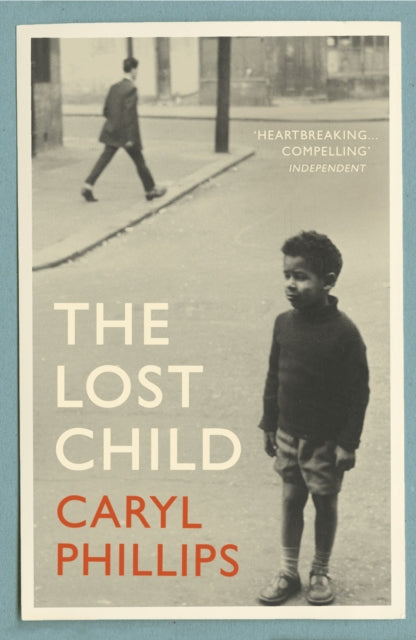
Vintage Publishing The Lost Child
Book SynopsisDiscover this heartrending story of orphans, outcasts and the grip of the past from award-winning novelist Caryl Phillips – inspired by Wuthering Heights.It is the 1960s. Isolated from her parents after falling in love with a foreigner, Monica Johnson raises her sons in the shadow of the wild Yorkshire moors. But when her younger son Tommy, a loner who is bullied at school, disappears, the family bond is demolished – with devastating consequences.Deftly intertwined with this modern narrative is the story of the ragged childhood of Emily Brontë’s Heathcliff, one of literature’s most enigmatic lost boys. Recovering the mysteries of the past to illuminate the predicaments of the present, The Lost Child is an exquisite novel about exile, freedom and what it is to belong. ‘Heartbreaking…compelling’ IndependentTrade ReviewHeartbreaking... Compelling * Independent *The prose is as sleek as you would expect from a writer as accomplished as Phillips * Guardian *Phillips has found a way to enlist the strange energy of Emily Brontë’s work and redirect it to powerful and surprising effect * Times Literary Supplement *Expertly written and artfully crafted * Daily Mail *
£9.49

The University of Chicago Press The Compensations of Plunder How China Lost Its
Book SynopsisTrade Review“Jacobs tells the story of how the cultural relics of northwest China were collected, dispersed, and sometimes destroyed, in a new and refreshingly nonjudgmental way. Drawing on insights from literature on similar processes in the ailing Ottoman Empire as well as on primary sources in English, French, and Chinese, he narrates this story in granular detail and with a keen sense of the motives of the individual actors on both the Western and Chinese side of the story. Clearly the result of a very meticulously researched project, The Compensations of Plunder is a well-crafted and tremendously enjoyable read.” * Pär Cassel, University of Michigan *"This revisionist work challenges Chinese nationalist discourse of how China lost its treasure during the turn of the 20th century to reevaluate the rational historical actors—Western archaeologists who went on expeditions in Xinjiang—through a new explanatory framework: the compensations of plunder." -- G. Li * Choice *"This beautifully written and theoretically sophisticated study focuses on Western expeditions to Xinjiang and the Dunhuang region from 1900 to 1930, particularly those of Aurel Stein and Paul Pelliot... The Compensations of Plunder also speaks to the politics of the Chinese frontier, Western culturalism and racism, and the development of Chinese archaeology." * Journal of Asian Studies *"The Compensations of Plunder makes an important intervention in studies of the Silk Roads, cultural heritage preservation, and modern Chinese history. It lays the groundwork for further thinking about the intersection between empires, nation-states, and cultural heritage in ways that complicate and augment our understanding of the troubled history of twentieth-century collecting." * Journal of Chinese History *Table of ContentsIntroduction 1. Sahibs in the Desert 2. Accumulating Culture 3. Gentlemen of Empire 4. The Priceless Nation 5. Rise of the Apprentices 6. Foreign Devils Begone Conclusion Acknowledgments Glossary of Chinese Characters Notes Bibliography Index
£29.70

Sourcebooks, Inc Frenchmans Creek
Book Synopsis
£15.29

Ugly Duckling Presse Lost Horizon
Book Synopsis
£13.30

The Gresham Publishing Co. Ltd The Three Musketeers: Abridged and Retold with
Book SynopsisThis edition of The Three Musketeers contains a retold novel, an introduction, notes on the author, notes on the period when the book is set, the book's themes, a simple glossary, and a free CD (running time 2 hours). The book on the CD is read slowly and clearly to aid comprehension. This novel set in the 17th century is an exciting adventure story about a young man called d'Artagnan who leaves home to travel to Paris, to join the Musketeers of the Guard. The three musketeers (of the title of the book) are his friends Athos, Porthos and Aramis whose motto is 'one for all, all for one'. Dumas was writing about the old regime in France so puts his musketeers through adventures that take the friends through many absurd quests, and injustices to expose things that had happened before the French Revolution. The musketeers provide exciting entertainment. Dumas wrote two more novels about the three musketeers. The book has inspired films, musicals and plays, and was written as a serial first, published in a magazine.
£8.56

Crabtree Publishing Co,Canada The Mystery of the Lost Library Book
Book Synopsis
£8.23


